Article Archive

Articles from the last 10 years of publication can be found below.

Budapest

'Cosy Cafés and Culture Wars: Orbanism and Academia in Budapest'

On arriving at Budapest airport, the traveller is confronted by the greeting ‘Welcome to Family-Friendly Hungary’ in multiple languages.
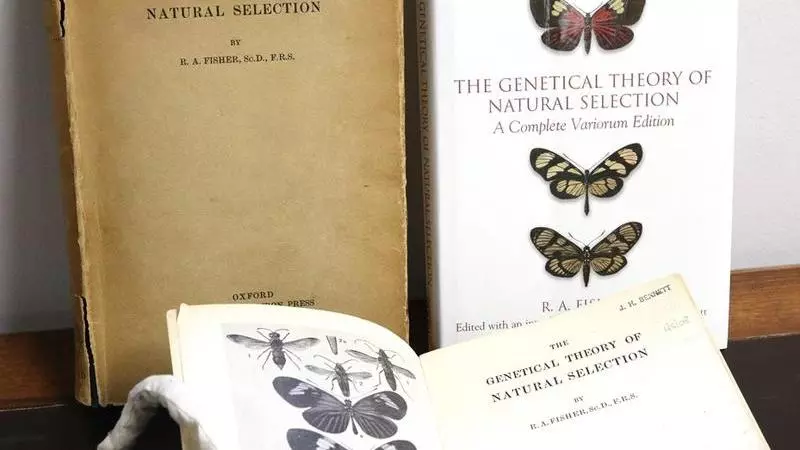
Three editions of The Genetical Theory of Natural Selection, published in 1930 (top-left), 1958 (bottom, open), and 1999 (top-right).

A Backwards Book: New Perspectives on a Classic Scientific Text

On 7th June 2020, amid global Black Lives Matter protests, a petition appeared on change.org, calling for the removal of a stained-glass window from the dining hall of Gonville and Caius College, Cambridge.
Lyndal Roper being awarded The Holberg Prize

A Celebration of History and its Possibilities: The Award of the Holberg Prize to Lyndal Roper

During the 2026 Holberg Week, held from 1 to 4 June in Bergen, Lyndal Roper was award the prestigious Holberg Prize. The week also included Symposiums, masterclasses and lectures.
This image is dedicated to supporting the resilience, strength and hope of survivors of modern slavery

A Historian Devoted to Humanitarian Diplomacy

“I am a historian devoted to humanitarian diplomacy”. This is how I have been introducing myself over the past year.
Left: Rudolf Berlin (1833-1897), Right: Adolph Kussmaul (1822-1902)

A Historical Perspective on Dyslexia

What is dyslexia? It seems a simple question, and one perhaps best answered by psychologists, rather than historians.
Professor John Watts

A Medievalist in the Chair

To me, as a medieval historian, Oxford is rather like the Holy Roman Empire.
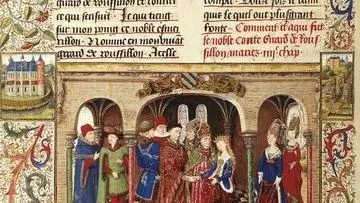
Sigismund I and Bona Sforza

A Renaissance Royal Wedding 1518-2018

This spring, the Bodleian Library’s new Weston Building will host an exhibition entitled A Renaissance Royal Wedding, marking the 500th anniversary of a landmark sixteenth-century match.
Algeria: A Place with People in it

Algeria: A Place with People in it

I first went to Algeria in 2001, when my DPhil research was almost complete. Like almost everyone else from outside the country trying to work on its history in the late 1990s, and like almost everyone then writing about its ongoing crisis, I had previously seen it only from a distance.
“Apotheosis of Washington”, 1802

American Revolutions

Most previous books on the revolution, especially popular histories, focus obsessively on the national story of the United States, on the development of its republican institutions at the national level.
Anne Whiteman, 1953

Anne Whiteman

Generations of undergraduates, especially of Lady Margaret Hall, will remember Anne Whiteman, or more probably ‘Miss Whiteman’, History Tutor of the college from 1946 to 1985.
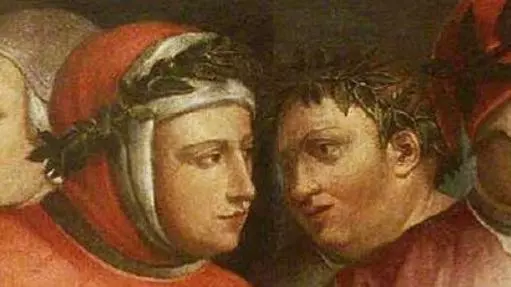
The Oriel Ritaratto di sei poeti toscani (Portrait of Six Tuscan Poets)

Art as History by the First Historian of Art: Giorgio Vasari’s Ritratto di sei poeti toscani

Hanging in the senior common room of Oriel College, above the fireplace and in pride of place at the heart of the room, hangs a rather curious painting. Surrounded by dark portraits of former provosts and fellows, the painting catches the eye if for no other reason than its incongruity with the surrounding works. Depicting six men in intense discussion, its crowded frame and bright, almost fresco-like quality immediately mark it out as something different.
The 19th century Myth of Nations - Clovis I leading the Franks to victory in the Battle of Tolbiac, in Ary Scheffer’s 19th-century painting

Barbarism and Superstition: the Middle Ages in Modern Times

I study, among other things, the fifth century. Normally, this is the definition of a niche activity; but it’s not normal right now. For some fifteen months—since the killings in Paris in November 2015, since the EU Referendum, and since the US election—the fifth century has gone mainstream. For it was in the course of these hundred years that the Roman Empire partially collapsed as a political structure.
Bloodsuckers of the Commonwealth: Monopolies, petitioning and the public sphere in early modern England

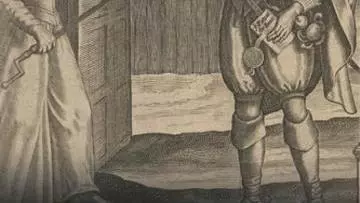
Bloodsuckers of the Commonwealth: Monopolies, petitioning and the public sphere in early modern England

I’m delighted that my first monograph, Bloodsuckers of the Commonwealth: Monopolies, petitioning and the public sphere in early modern England (Manchester, 2025) was longlisted for the 2026 Royal Historical Society First Book Prize.
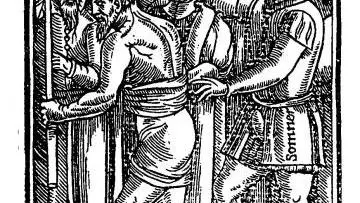
Penance with Fustigation (from John Foxe's Book of Martyrs)

Carnal Knowledge: Regulating Sex in England, 1470-1600

Fear stalked the city! Already a religious revolution was in train – traditional practices were being abandoned, images torn down and smashed, new vernacular forms of worship came into use.
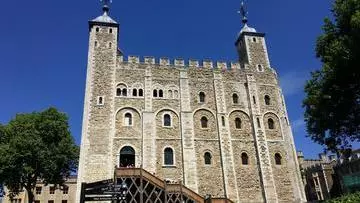
Tower of London

Catherine Jenkinson nominated for Vice-Chancellor’s Awards for the Breakthrough Researcher Award

Catherine Jenkinson has been shortlisted in the 2025 Vice-Chancellor’s Awards for the Breakthrough Researcher Award for ‘Transforming Heritage Research through Exemplary Collaborative Practice’.
Irish Boundary Commission

Changing Times and the Irish Border

The Government of Ireland Act, 1920 and Anglo-Irish Treaty of 1921 had elevated the old county limit into a boundary between states.
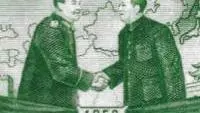
Stamp from 1950

Communism in an Enchanted World: Supernatural Politics in Stalin’s Russia and Mao’s China

In 2004 a Siberian shaman, Toizin Bergenov, was hired by deputies in the Russian duma to purge the parliament of evil spirits drawn by the negative energy of angry debates; while in China over one million members of the Eastern Lightning sect, led by a peasant woman who styles herself ‘Almighty God’, readied themselves for the last days.
Pacific Mail Steamship Company brochure, c.1926-7

Crossing continents: Panama and the making of the Modern World

As a historian of the United States in Oxford, there is no escaping countless hours crammed into an economy airplane seat en route to conferences and research trips across the Atlantic. If there is glamour in long-haul travel, it quick wears off as soon as the person in front of you reclines.
David Bowie (Zagreb, 1990)

David Bowie and 'The Spectator'

Bowie’s keen interest in musical theatre is well known. In 2002 he told the BBC’s John Wilson that he had wanted to write for the theatre from the very start of his career. But why early eighteenth-century London and why ‘The Spectator’?
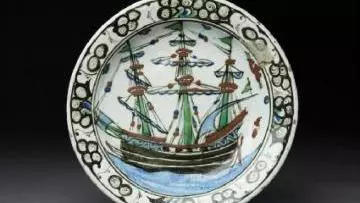
A plate with a painting of a ship

Empire History at Oxford

Few subjects have experienced such a dizzying ride on the rollercoaster of intellectual fashion as the academic study of modern imperial history.
The Khosro Cup. Département des Monnaies, Médailles et antiques, Bibliothèque nationale de France, inv. 379.

Empires of Faith: interactions in art and religions of Late Antiquity across Eurasia

Carved into a rock crystal medallion, the Sasanian King of Kings (Šāhanšāh) confronts the viewer from his elaborate couch. Around him, circles of garnet and rock crystal decorated with rosettes are set in a gold openwork cup, interspersed with green glass. These inlays encircle the king in three rows, increasing in size with each row as if emanating from the centre.
Empires of the mind: the colonial past and the politics of the present

Empires of the mind: the colonial past and the politics of the present

‘When the history books come to be written’ is a favourite trope used by politicians anxious that the verdict of history may not be as kind to them as they would like.
Exploring Graduate Research at the Oxford Medieval Society

Exploring Graduate Research at the Oxford Medieval Society

From politics to poetry, and pots to palaeography - Veronique Thouroude reports the rude good health of Oxford Medieval studies, and of the society founded in 1927 to promote them.
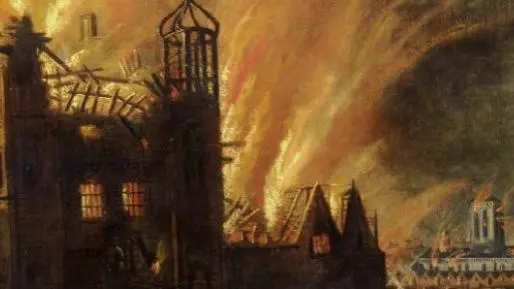
The Great Fire of London, with Ludgate and Old St. Paul's (Unknown Artist, 17th century)

Facing up to catastrophe: The Great Fire of London

The Great Fire of London was a true catastrophe. Over the course of four days (2-5 September 1666) the ‘most horrid malicious bloody flame’ destroyed 373 acres of the area within the city walls (about 85%)
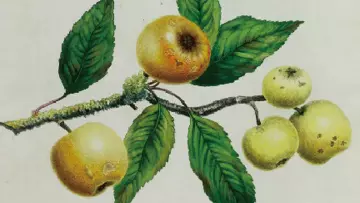
An illustration of the ‘Golden Pippin’ from Knight, Thomas Andrew. 1811.

Food security, heredity, and the environment in nineteenth-century Britain

The last few decades have witnessed increasing alarm from scientists from numerous areas of research on the climate and sustainability, particularly on the lack of action and response we have made to rising crises.
Roman statue's ankle

From Analysing Power to Contemplating Socks: An Alumni Perspective on Studying History

Lucy Kilbey graduated with a BA in Ancient and Modern History in 2011. She now works within the University and continues to study and write on history when she has time.
Botley Cemetery 8 October 2016

From Aotearoa* to Oxford: Commemorating New Zealand Soldiers buried at Botley Cemetery

As a light rain began to fall at Botley Cemetery, Brigadier Evan Williams reminded me that, for Mãori, rain during a sacred ceremony symbolised divine sorrow. New Zealand’s most senior military representative in Europe had joined us to commemorate the lives of the nine New Zealand soldiers who fell during the First World War and who were buried in Botley Cemetery.
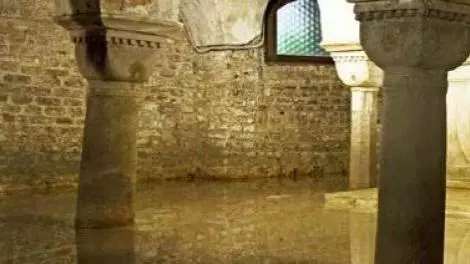
Crypt of S. Zaccaria, Venice

From Byzantine to Ottonian Empires: Venice, Ravenna and Rome

The richest and most politically complex regions in Italy in the earliest middle ages were the Byzantine sections of the peninsula, thanks largely to their continued links with the Byzantine empire. But what happened to them when those links broke?
Indian Home Rule

Gandhi Against the Human Race

The language of anti-colonialism has historically been dominated by a desire to acknowledge the humanity and therefore equality of all peoples, its critique often turning on the threat imperialism posed to the lives of its subjects.
Death of General Wolfe - Benjamin West (1770)

Global War and Disease: The Making of Modern Bodies

One of the most popular and famous British portrayals of eighteenth-century imperial war is Benjamin West’s The Death of Wolfe, first displayed in 1771.
Joseph Highmore’s illustration of Pamela teaching her children (1743–45); in volume four of Samuel Richardson’s novel, Pamela

Home education in historical perspective: domestic pedagogies in England and Wales, 1750-1900

Christina de Bellaigue talks about her new publication
Hubert Stadler

Hubert Stadler: A Memorial

Early in the New Year, the Faculty was shocked to learn of the sudden death in post of Hubert Stadler, its Graduate Officer, and one of the longest serving members of the admin team.
“The New British Possession in the Eastern Archipaelago.” Illustrated London News [London, England] 9 Oct. 1847

Imperial reputations and early Victorian politics

Victorian politicians and writers engaged with the empire, channelling wider anxieties about Britain’s imperial systems and responsibilities. We tend to think of this, however, as a phenomenon of the later decades of the nineteenth century – when competitive European imperialism was at its height, and when empire was a consistently important political issue.
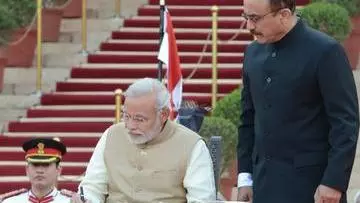
Shri Narendra Modi taking oath as the 15th Prime Minister of India.

India Decides: 2014

Judith Brown, former Beit Professor of Commonwealth History, casts a historian's eye on last year's landslide that brought Narendra Modi to power.
Jeremy Catto

Jeremy Catto (1939-2018): A tribute by John Watts

Jeremy Catto was one of the most important and fertile historians of the Late Middle Ages, and particularly of the worlds of learning, religion and government, worlds whose numerous interconnections he delighted in demonstrating.
Maréchal Pétain shaking hands with Adolf Hitler

Jewish Groups in Vichy France

Between 1940 and 1942, the regime invited young French Jews across the non-Occupied Zone to take part in a host of new initiatives alongside their non-Jewish peers that aimed to revive the nation in the aftermath of the national defeat to Germany.
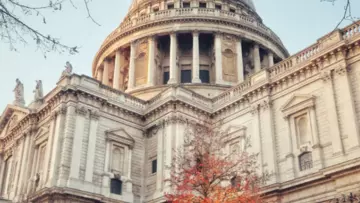
St Paul's

Lessons from History

This series of six events ran from the autumn of 2019, initially at the offices of our co-hosts Sarasin and Partners in London, and latterly online.
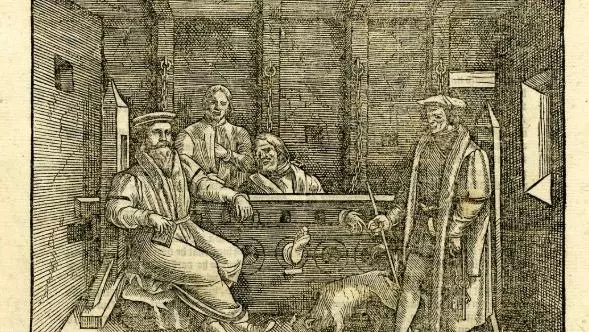
A prison cell, with one man in the stocks, three other men standing or sitting, and a dog chewing on a bone; illustration to page 1418 of a 16th-century edition of John Foxe, 'Acts and Monuments' ('Book of Martyrs').

Life and Death in Tudor Prisons

Working with a number of heritage sites across the country, the project seeks to ask who was in prison, why they were there, and how, other than execution, they died.
Professor Peter Frankopan

Life as an Historian

Dr Peter Frankopan discusses what influenced him to become an historian, why he chose Oxford and his recent activities
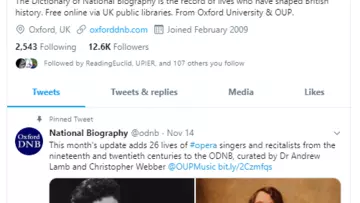
Oxford DNB webpage

Lives and Our Times: Including the Recently-Deceased in the Oxford DNB

It is said that when John Maynard Keynes met someone new, he would ask himself whether that person would make it into the Dictionary of National Biography.
Katherine Murray, large miniature by John Hoskins (1638)

Locating Women’s Agency in Early Modern Spaces: Knowledge Exchange, History and Heritage

In a small, darkened room above the north entrance of Ham House, Richmond, a solitary glass case displays a single painting. It hangs there not as an act of restoration, since there is no evidence the painting was ever kept in this closet, but as the culmination of a knowledge exchange project between the University of Oxford and the National Trust.
A woodcut of someone being transported

Making History Personal

In 1850, William was caught stealing a coat, for which he was transported to Van Diemen’s Land (Tasmania) for seven years.
Oxford Castle on David Loggan’s map, 1675.

Mapping Historic Oxford

In January this year the Divinity School saw a celebration to mark the publication of an Historical Map of Oxford: the work of a team of historians and cartographers, themselves successors to an impressive array of Oxford antiquarians and topographers who have struggled to excavate, record and map the origins and development of the Saxon burgh into a medieval University town and, later, into a factory city.
Mark Whittow

Mark Whittow - A Memorial

Professor William Whyte gave the following speech at Mark Whittow's Funeral, which was held on Monday 12 February 2018
BL, Add MS 35324, f.31v.

Masters Dissertation Prizes 2020-21

Each year the Faculty of History awards prizes to those graduate students who have achieved the best performance overall within their cohort as well as those that have produced the best disseration within their cohorts.
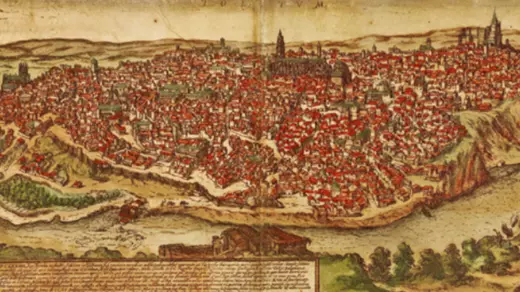
View of Toledo

Masters Dissertation Prizes 2021-22

Each year the Faculty of History awards prizes to those graduate students who have achieved the best performance overall within their cohort as well as those that have produced the best disseration within their cohorts.
The main block of the Union Medical School on Hatamen Street, old Peking, newly opened in 1906.

Medicine and history – a matter of degrees

When I came down from Merton in 1961, a history degree was simply a passport to your first job. Few graduates kept up an interest unless they intended to teach it.
Boat Race

Mr Bossum and the Boat Race

Shouldn't the Faculty have an eight on the river? Kathryne Crossley explores the precedents
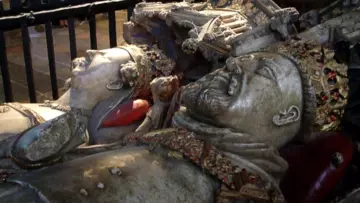
The tomb of Joan of Navarre, buried with King Henry IV at Canterbury Cathedral

Necromancy and Witchcraft – or Theft?

Six hundred years ago, on Friday 29 September 1419 – Michaelmas Day – the dowager queen of England, Joan of Navarre, was arrested on the orders of her stepson, Henry V.
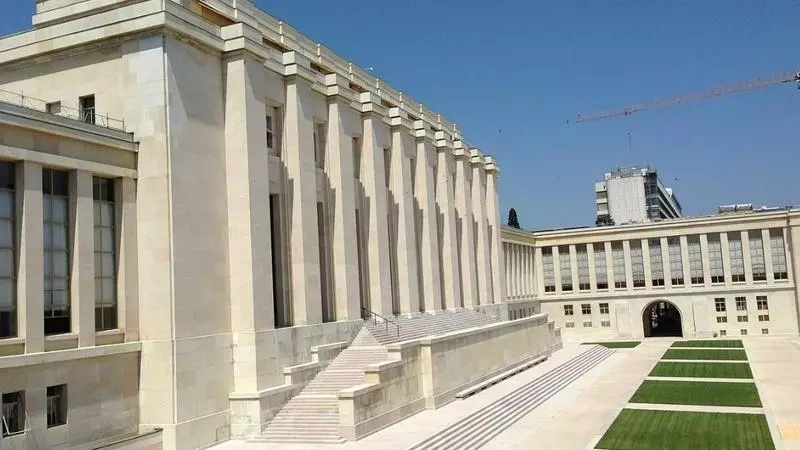
Palace of Nations

No Nazi Empire in Central Africa

The 2014 James Ford Lecturer, Susan Pedersen, Shenton Professor of History and the Core Curriculum at Columbia University, explains how a New College historian, William Ormsby-Gore, fell out of love with the League.
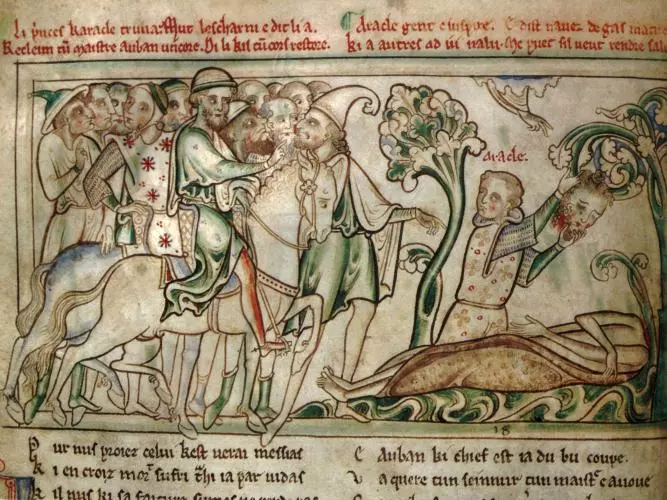
The murder of St Clovis

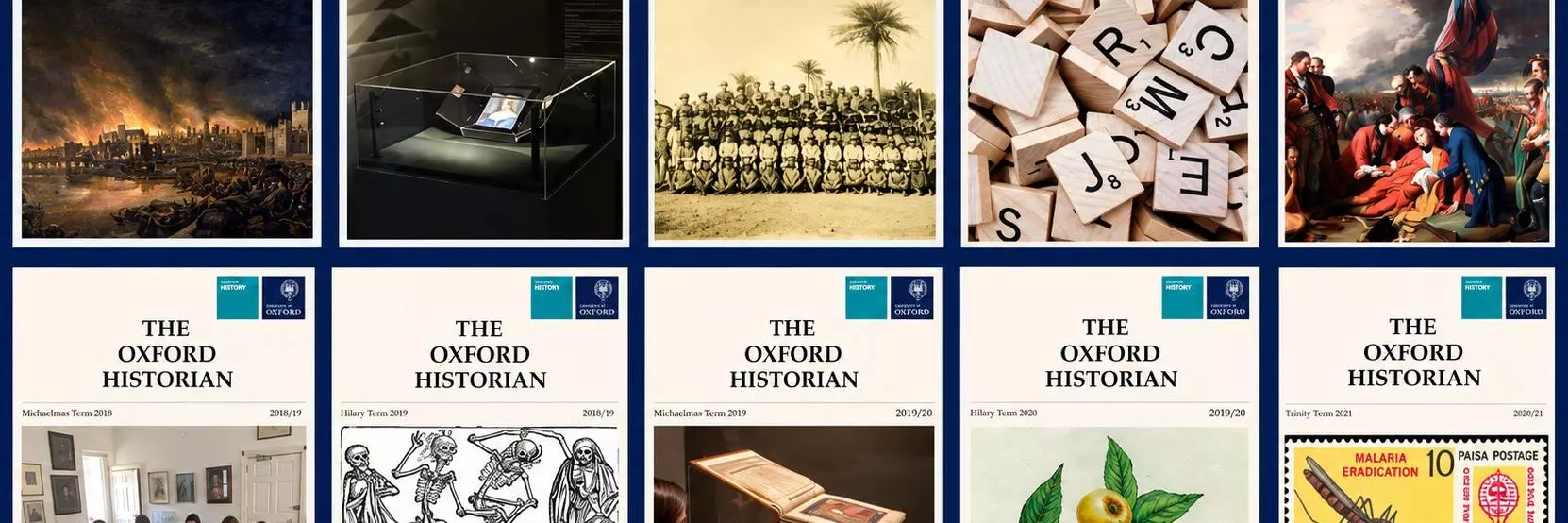
Past Issues

You can find past issues of The Oxford Historians online