Faculty of History
The Oxford Historian
Past Issues
Articles





Algeria: A Place with People in it
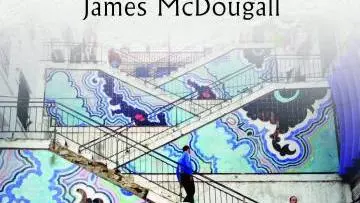
I first went to Algeria in 2001, when my DPhil research was almost complete. Like almost everyone else from outside the country trying to work on its history in the late 1990s, and like almost everyone then writing about its ongoing crisis, I had previously seen it only from a distance.

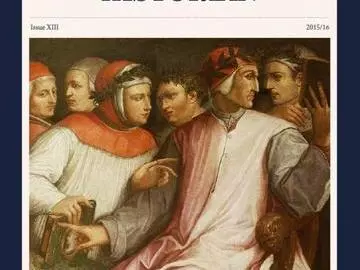
Art as History by the First Historian of Art: Giorgio Vasari’s Ritratto di sei poeti toscani
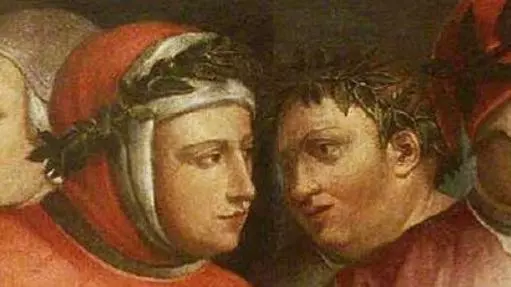
Hanging in the senior common room of Oriel College, above the fireplace and in pride of place at the heart of the room, hangs a rather curious painting. Surrounded by dark portraits of former provosts and fellows, the painting catches the eye if for no other reason than its incongruity with the surrounding works. Depicting six men in intense discussion, its crowded frame and bright, almost fresco-like quality immediately mark it out as something different.

Barbarism and Superstition: the Middle Ages in Modern Times
I study, among other things, the fifth century. Normally, this is the definition of a niche activity; but it’s not normal right now. For some fifteen months—since the killings in Paris in November 2015, since the EU Referendum, and since the US election—the fifth century has gone mainstream. For it was in the course of these hundred years that the Roman Empire partially collapsed as a political structure.
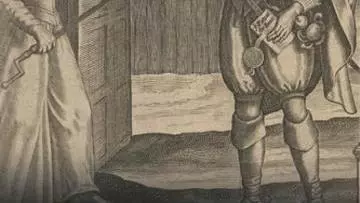
Bloodsuckers of the Commonwealth: Monopolies, petitioning and the public sphere in early modern England
I’m delighted that my first monograph, Bloodsuckers of the Commonwealth: Monopolies, petitioning and the public sphere in early modern England (Manchester, 2025) was longlisted for the 2026 Royal Historical Society First Book Prize.
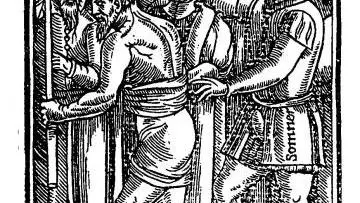
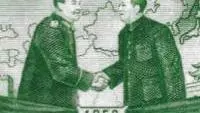
Communism in an Enchanted World: Supernatural Politics in Stalin’s Russia and Mao’s China
In 2004 a Siberian shaman, Toizin Bergenov, was hired by deputies in the Russian duma to purge the parliament of evil spirits drawn by the negative energy of angry debates; while in China over one million members of the Eastern Lightning sect, led by a peasant woman who styles herself ‘Almighty God’, readied themselves for the last days.

Crossing continents: Panama and the making of the Modern World
As a historian of the United States in Oxford, there is no escaping countless hours crammed into an economy airplane seat en route to conferences and research trips across the Atlantic. If there is glamour in long-haul travel, it quick wears off as soon as the person in front of you reclines.

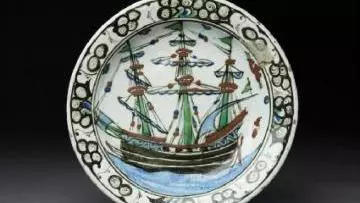

Empires of Faith: interactions in art and religions of Late Antiquity across Eurasia
Carved into a rock crystal medallion, the Sasanian King of Kings (Šāhanšāh) confronts the viewer from his elaborate couch. Around him, circles of garnet and rock crystal decorated with rosettes are set in a gold openwork cup, interspersed with green glass. These inlays encircle the king in three rows, increasing in size with each row as if emanating from the centre.


From Aotearoa* to Oxford: Commemorating New Zealand Soldiers buried at Botley Cemetery
As a light rain began to fall at Botley Cemetery, Brigadier Evan Williams reminded me that, for Mãori, rain during a sacred ceremony symbolised divine sorrow. New Zealand’s most senior military representative in Europe had joined us to commemorate the lives of the nine New Zealand soldiers who fell during the First World War and who were buried in Botley Cemetery.
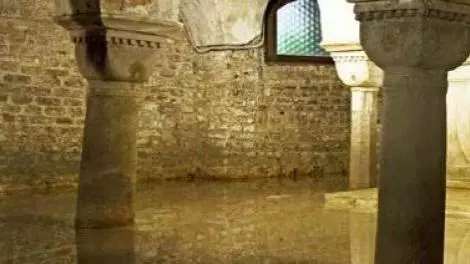
From Byzantine to Ottonian Empires: Venice, Ravenna and Rome
The richest and most politically complex regions in Italy in the earliest middle ages were the Byzantine sections of the peninsula, thanks largely to their continued links with the Byzantine empire. But what happened to them when those links broke?


![“The New British Possession in the Eastern Archipaelago.” Illustrated London News [London, England] 9 Oct. 1847](/sites/g/files/vzsiac1256/files/styles/oxfcms_responsive_16_9_medium/public/2026-08/imperial.jpg.webp?h=a3434e70&itok=um7xMoY5)
Imperial reputations and early Victorian politics
Victorian politicians and writers engaged with the empire, channelling wider anxieties about Britain’s imperial systems and responsibilities. We tend to think of this, however, as a phenomenon of the later decades of the nineteenth century – when competitive European imperialism was at its height, and when empire was a consistently important political issue.



Locating Women’s Agency in Early Modern Spaces: Knowledge Exchange, History and Heritage
In a small, darkened room above the north entrance of Ham House, Richmond, a solitary glass case displays a single painting. It hangs there not as an act of restoration, since there is no evidence the painting was ever kept in this closet, but as the culmination of a knowledge exchange project between the University of Oxford and the National Trust.


Mapping Historic Oxford
In January this year the Divinity School saw a celebration to mark the publication of an Historical Map of Oxford: the work of a team of historians and cartographers, themselves successors to an impressive array of Oxford antiquarians and topographers who have struggled to excavate, record and map the origins and development of the Saxon burgh into a medieval University town and, later, into a factory city.