Please note that the options listed below are illustrative and may be subject to change.
St Augustine and the last days of Rome, 370-430
The life and times of St Augustine (d. 430) are not what you think.
Augustine is often typecast as a Church Father tormented by the memory of his youthful sexual urges -- but the story he wanted to tell his contemporaries in the later Roman Empire was more complicated and more interesting than this. Augustine was a man who did not know why his life had taken the course that it had. He had rejected the love of his life for the sake of his career as a public speaker, and then, having risen to the very top of his profession, he had given it all up to become bishop of a provincial town in North Africa. Relentlessly curious to observe how his own transformations related to the experience of others, Augustine watched the needs and frustrations of new-born babies, marvelled at the perfect physical control of contortionists and meditated on his mother's sudden cure from alcoholism. Augustine’s Confessions and his City of God are texts about desire, disillusion, and being human—in a hot, pre-industrial autocracy almost unrecognisable to a modern audience.
This was also a regime under strain: in 378, a Roman Emperor was killed by barbarians in battle; in 410, notoriously, the city of Rome was sacked; twenty years later, as Augustine lay dying, barbarians had overrun the western Empire and were about to take over his town. How did contemporaries react to these events? (Did they notice?)
In addition to the writings of Augustine, we study texts of and about the great and the good in the Roman Empire, such as the pagan senator Symmachus or the Christian heiress Melania the Younger, who sought to guide (or to abandon) the ship of the late Roman state as it steered into crisis.
Francia in the Age of Clovis and Gregory of Tours
This Special Subject is built around the fullest and most readable historical work of the early middle ages, the Histories of a Gallo-Roman bishop of Tours, Gregory. The bulk of the work is about the period when he was a bishop and thus a considerable political figure, and the structure is loose enough to find room for an almost endless series of anecdotes, told with immense verve. Gregory was keen to berate his contemporaries for their moral failings, his works provide remarkably detailed information on the habits and customs of his age. The set texts include some of Gregory’s saints’ lives and miracle stories, which are written with the same power as the Histories and show Saints and their relics intervening regularly in affairs on earth.
Other texts present a different view of events, which can be compared and contrasted to Gregory’s. The poems of Fortunatus paint a very rosy picture of Gallo-Roman bishops and Frankish monarchs; and Caesarius of Arles offers a rival ideal for the ordering of the Christian life, for him centred on monasteries and pastoral care. Two legal texts, the earliest Frankish law-code and the canons of the church, tell us much about both Frankish and Roman ways of making law and keeping peace. Finally, some important archaeological finds, including the richly furnished burial of a pagan king, allow the Franks to speak to us directly from their graves.
These texts provide a vivid and detailed picture of the Franks as they settled amongst a Gallo-Roman population with its own proud and ancient traditions. They provide an excellent insight into the mental and social world of the early middle ages, with its belief in the active intervention of God and his Saints on Earth and its bonds of fierce kin-loyalty and the power of vengeance.
On the Road to Baghdad (892-1055)
On the banks of the Tigris, Baghdad evokes the orientalism of the medieval folk tales of Scheherazade and Sinbad the sailor. From 762 to 1258, it was the seat of the ‘Abbāsids, one of the greatest Eurasian empires. On the road to Baghdad (892-1055) explores the turbulent history of the city in the tenth century ; a history of revival, conflicts and crisis.
After years of anarchy in the mid-9th century, Baghdad thrived under the sovereignty of al-Mu‘taḍid (892-902). Al-Mu‘taḍid was a skilled caliph and fierce military leader, who restored Baghdad’s glory, investing money in the city’s religious and civil life, and using diplomacy, gifts and courtesies with neighbouring powers, such as Egypt and Iran to secure the movement of men, women and goods across Eurasia. At the turn of the tenth century, Baghdad was the seat of a strong government, with powerful women involved in its politics, and a wealthy and influential city.
Yet, over the tenth century, the capital of the Islamic world progressively lost its supremacy. Popular riots and the rising influence of warlike mountainous communities of Kurds and Iranian from the region of Daylam challenged the authority of the ‘Abbasid caliphs in Baghdad. The successors of al-Mu‘taḍid were feeble leaders. In 945-6 the Būyids, an Iranian military family, were able to seize Baghdad, establishing control over Fārs in south-west Iran and then Iraq in the mid-tenth century.
The failure of the ‘Abbasids and the rise of the Būyids in Baghdad resulted in dramatic changes in the city’s hierarchies, system of governance and socio-cultural practices. Baghdad was deprived of its central administrative function, as the Būyids established two other principalities in Iran, at Shīrāz in Fārs and Rayy in al-Jibāl. Moreover, while the Būyid emirs respected the caliphate and acknowledged the status of the ‘Abbasid family, the caliph of Baghdad became a symbolic figurehead, who the Būyids could control and dismiss. Eager to revive Persian traditions, that had been lost with the rise of Islam and the dominance of Arabic, the Būyid emirs also adopted Persian symbols of kingship (such as the title of shahanshah) as well as persianized the structure of the government. The secular Iraqi and Baghdadi nobility lost its authority and role in the administration of the caliphate, which fell under the remit of Iranian families and Turkic slave soldiers.
The evolution of Baghdad from a Eurasian capital to a principality in the Būyid federation echoes its economic transformation from 892 to 1055. During this century and a half, Baghdad’s patterns of commercial and diplomatic connections changed significantly. The city was no longer unifying the Indian Ocean and the Mediterranean. From the mid-tenth century, the map of Baghdad’s networks was redrawn to favour eastern relations with Iran, Chola India and Sung China. Trade and travel along the Persian Gulf and across the Indian Ocean was privileged and rested on the apogee of the port of Sīrāf in Iran and the conquest of Sohar in Oman.
Byzantium in the Age of Constantine Porphyrogenitus from 913 to 959
By the tenth century, the cultural and the political revival of Byzantium had gathered momentum after a long dark age. The cultural revival showed itself in manuscript illuminations and monumental works of art, in a new flowering of religious life, both orthodox and heretical, and in the gathering of the debris of classical thought and literature. The political revival showed itself in successful warfare against an encircled Bulgaria, small Armenian principalities and the fragmented Arab empire, in the widening horizons of Byzantine diplomats and in the growing cultural influence of Byzantium upon the Slav world.
The texts for this Special Subject (all the texts are studied in English translations) include sermons, letters, Byzantine and foreign chronicles and several compilations. Together they provide the major body of information which illuminates the revival of Byzantium, the history of the neighbouring powers of the Near East, the outline of those personal groupings of generals and bureaucrats which shaped the internal political history of Byzantium which have left a deposit of their secret malice and resentment in the pages of the surviving chronicles.
However, it is the survival of the compilations (guides to administrative practice and manuals of statecraft) which makes the study of Constantine’s reign particularly interesting. For they were based on lost official material which enables the historian to penetrate below the surface of events and to watch the slower-moving and underlying history of institutions, from the court and administrative system to the economic and social foundations of the state (in particular the steady encroachment of the aristocracy on small landholders in the provinces). Perhaps the most important compilation is the De administrando imperio, which contains much material about relations with foreign states and reveals Byzantium’s two ways of viewing the world around it: the one realistic, the other ideological.
Art & the Anthropocene: Imagining, Taming and Transforming the Environment
The Special Subject considers the range of ways that medieval people inhabited, thought about, and shaped their environments through close study of texts and images made between ca. 1000-1450. Focusing primarily on a ‘global’, connected, Europe, the paper interrogates the complex roles that ideologies, beliefs and institutions played in shaping medieval people’s attitudes towards the world in which they lived. Their ideas and practices drew on the legacies of ancient Eurasian empires, and would have lasting influence, becoming deeply embedded in European settler-colonialism, the legitimization of extractive and exploitative behaviors, the production of modern ecological crises and the inspiration of environmental movements. Although generally overlooked by those interested in the causes of today’s planetary situation, the millennium between the fall of Rome and the invasion of the Americas was the laboratory for distinctively European attitudes to the environment and its governance.
The paper takes students into the medieval understanding of space and time, beginning with visual and written imaginings of how the earth came to be, which foregrounded humans’ dominion, and fantasies of its apocalyptic ending, in fire, judgement, and human transcendence. It examines how time was marked out and seasonal cycles understood through depictions of agrarian labor and astrological symbols. It looks at distinct iconographies of the “natural” world and humans’ place within it, including medical manuals, herbals, parks and gardens, bestiaries with their moralized accounts of animals, the “wild man,” treatises on the so-called ‘perversion’ of Nature, representations of the hunt, water management systems, and the proliferation of plants in gothic architecture. How were these ideas used to support or critique power and gender and class hierarchies? What imagery and language was used when things went wrong, when there were wars, floods, famines, disease outbreaks, crop failures? Medieval people had a far wider view of agency than we do today, investing everything from the fabric of the cosmos, through organic life, to stones, water and gems, with potency and even intentionality.
The Norman Conquest of England
The Norman Conquest was one of the most cataclysmic events in English history; certainly many scholars have argued so since the seventeenth century. More recently it has inspired some of the best work in English by medieval historians: this has demonstrated that the giants of later nineteenth century historiography only constructed a framework and that this traditional framework is in certain respects demonstrably wrong. One reason for the continuing controversy is the profusion and richness of the sources, which are unparalleled in contemporary Europe.
The aim of this Special Subject is to encourage undergraduates to get to grips with these sources on much the same terms as those who are fighting in the midst of the historiographical fray. There are narratives: some contemporary or nearly contemporary (including the Bayeux Tapestry); others later local accounts of change and survival as seen from Abingdon, Evesham, York and Durham; yet others attempt to make sense of the Conquest as a whole from a twelfth-century perspective. In this final category Eadmer and Orderic Vitalis, both looking back through English eyes, though in very different ways, are particularly striking. The biography of the English survivor (or quisling?) Wulfstan and the letter collection of the Italian ‘new Englishman’ Lanfranc help to reveal both the strength of English ecclesiastical traditions and the scale and pace of the changes ruthlessly imposed on the English church.
Joan of Arc and her Age, 1419-1435
The brief life, condemnation, death and rehabilitation of Joan of Arc (c.1412-1431) have fascinated writers, artists, film-makers, politicians and thinkers of many different political and religious persuasions. A legendary figure has in effect replaced the ‘real’ Joan of Arc in the popular imagination. For the historian, however, her career and its aftermath provide ample scope for the investigation of relationships between politics and religion, of gender relations and role-reversal, and of the evolution of national consciousness and identity.
The Special Subject is a contextual study of the age of Joan of Arc, as well as an examination of her career and its impact. It will necessarily address issues such as the fortunes (and misfortunes) of the Lancastrian double monarchy of England and France; the religious, intellectual and ecclesiastical climate of the period (coinciding as it did with the post-Schismatic papacy and the Conciliar Movement); the role of the University of Paris and of the Norman clergy in the instigation and conduct of trial proceedings against Joan and the more general issues of collaboration, resistance and divided allegiance among the French people at this time. English interest and investment in Lancastrian France will also be studied from selected test cases as well as gains and losses illustrated from both written and visual evidence. Joan’s place among the female mystics, visionaries and prophetesses of her time will be assessed, as well as the implications and consequences of her adoption of male dress, her role as a military leader, and her defiance of ecclesiastical authority.
Politics, Art & Culture in the Italian Renaissance, Venice & Florence, c. 1475-1525
The city-republics of Venice and Florence around 1500 have long been regarded as foundational models in the political and visual culture of the western world and beyond. Each experimented with republican ideals, and each produced powerful myths in text and image. In these decades of crisis and uncertainty, both, additionally, claimed a cultural primacy based on artistic styles and political ideas. Most potent has been Giorgio Vasari’s triumphalist account of Florentine art: the course gives an opportunity to dissect this influential Tuscan myth, and to compare it with its Venetian rival. The course will look not just at ‘great’ artists but also at the wider spectrum of cultural production and consumption. The prescribed sources include both art writing of the period and a number of paintings, as well as set texts about the true relationship of Renaissance culture to Antiquity, the place of religion in this supposedly secularising society, and changing views of human nature and history. But the course is not confined to the ‘high’ arts or the culture of the learned. We will investigate the relations between Humanism and the diffusion of print, institutional religion and lay devotions, and broader views of material culture taking into consideration the market for objects and their social uses. Among our sources will be the diary of a Florentine shopkeeper and Venetian legal records. And we will understand ideas in their social context, including social distinctions (and their visual markers) particularly in relation to gender and to migrant communities. Finally, we will push the exploration of classic Venetian-Florentine connections beyond Italy itself by studying the creative connections between Italy and the Islamic world of the Levant, the Ottoman Empire and Persia.
The Peasants' War of 1525
The German Peasants’ War of 1525 was a huge revolt which convulsed most parts of Germany. Inspired by ideals of brotherly love and the gospel, peasants formed bands, uniting to attack serfdom and their lords. They joined forces with townsfolk and took as their demands the ‘Twelve Articles of the Peasants’, written by a furrier and a preacher from Memmingen. Miners in mining areas including Saxony and Thuringia, near where Luther had grown up, joined the revolt. For three or four months in early 1525, the peasant armies seemed to sweep all before them. The event was a watershed in the history of the Reformation and forced people to take sides. Luther famously condemned the peasants as ‘mad dogs’, and made it clear that he did not support them. The radical revolutionary Thomas Muentzer tried to bring about a new order, but when his peasant
forces were defeated, he was hanged. Andreas Karlstadt, Luther’s former co-worker, joined the peasants for a time but soon distanced himself from them: he ended up living in semi-hiding in Luther’s monastery.
This course will explore how individuals lived through the conflict. It will also ask about peasant subjectivity: what drove men and women to take the risk of rebelling against divinely-established authority? What rituals of revolt did they employ? How did they make links to townsfolk and miners? What was the role of theology in the conflict? How should we analyse revolt and what theorists help us to understand it?
Lost Voices
Historians typically characterise the early modern period as a time of accelerating global interaction and integration, fuelled by the rise of empires and world religions. However, this top-down depiction tends to obscure the upheavals and erasures that accompanied the profound cultural and social changes brought about by this process. This Special Subject paper attempts to redress the resulting imbalance in historical knowledge, while underscoring that the attitudes and responses of the groups and individuals undergoing such a transformation cannot be reduced to a single narrative. If approached carefully, the archives of the Inquisition – an ecclesiastical court that spread across the Catholic world – can offer a glimpse into the varied, complex experiences of these groups and individuals. As their beliefs, expressions, and practices were often deemed to transgress religious norms that were frequently reinterpreted in light of local circumstances, the Inquisition prosecuted thousands of people from Africa, Asia, and the Americas, as well as nonconformists, dissidents, and descendants of religious minorities from Europe, across the Mediterranean and the overseas territories under the rule of the Iberian crowns – from the Philippine Islands to West Africa and Latin America.
This paper explores the extremely diverse perspectives of a range of people who were tried by the Inquisition across the early modern world in a period between approximately 1530 and 1750. Trials involving offences such as apostasy, idolatry, witchcraft, sorcery, blasphemy, bigamy, and sodomy provide unique insights into historically marginalised groups, including people of African and Indigenous American origin, descendants of converted Jews and Muslims, mestizos, renegades, fugitives, political rebels, and queer people. Focusing on these individuals, the paper examines whether and how inquisitorial records – often the only surviving evidence of their lives – can be used to recover their subaltern perspectives. The methodological challenges involved have long been debated among historians of early modern Europe. Drawing on an original selection of primary sources, some of which are being made available in English for the first time, this paper is an exciting opportunity to investigate critical issues in historical research relating to colonialism, gender, race, and slavery within a variety of social, cultural, and religious contexts on a global scale.
The Trial of the Tudor State, 1540-1560
Tudor England faced unprecedented challenges between 1540 and 1560 as social and economic disruption and the strains of warfare were compounded by political uncertainty, religious change, and the accession of a child king, and two queens regnant. These developments severely tested the resilience of both state and society; the detailed study of these years also puts to the test many of the generalizations often made by historians about sixteenth-century England. This course will encompass everything from Tudor portraiture and print to the arguments over female rule, and from high politics to the religious and social tensions at parish level.
The period begins with the failure of Henry VIII to safeguard his succession, consolidate his religious policies or secure his military reputation; his vengeance increasingly savage as his health failed and his paranoia mounted. Acute economic difficulties formed the backdrop to the attempts of Edward and Mary to introduce innovative religious settlements, and both reigns saw both alarming political factionalism and sweeping social protest, with rebellions across the country in 1548-9, popular involvement in the struggle for the throne in 1553, and Wyatt’s rebellion of 1554 coming near to capturing London. Despite this, both reigns made important and unprecedented advances with their religious policies. It is arguably during these turbulent years that we first see the emergence of Protestant and Catholic identity within England, even as religious persecution acquired a new intensity during the reign of ‘Bloody Mary’. The first two years of Elizabeth’s reign show the political establishment struggling with the weight of that inheritance and the problems of queenship, advancing a political and religious settlement which reflected the turmoil of the past, and demonstrating the extent to which Tudor England had been transformed by the years of crisis.
The Crisis of the Reformation
The Reformation shattered the unity of Christendom, and the different churches that emerged were bitterly divided from each other. Rulers, churchmen and even many ordinary people were forced to take a stand on the pressing religious and political questions of the day. Yet nowhere in Europe could the ruler convince all their people that his or her rule was truly godly, sparking violent wars of resistance - wars for the soul of Europe itself. Men and women discussed the legitimacy of authority, and the very basis of political and religious life, as never before. The hotly contested questions of sovereign power and true religion were fiercely fought over, in armed conflict and through the printing press.
This special subject engages with the great political and religious questions of the late sixteenth century, through the classic texts of political thoughts and through lesser known pamphlets and documents. It
uses sources from Britain, France and the Netherlands to examine ideas of authority, resistance and religious purity. We will see how the uneasy compromises of the 1560s led to bloody warfare in France and the Netherlands, and we will look at how new ideas about the state and the church developed in order to contain these fierce passions.
The Thirty Years War
The Thirty Years War was one of the most destructive conflicts in European history, considered by many 20th century Germans to be a greater national disaster than the Second World War. The war was both a cause and a product of important underlying political, social, economic and cultural changes within early modern Europe that left a lasting impression on international relations. Using extensive contemporary written and visual sources, this special subject examines the causes, conduct and consequences of this conflict, as well as the surrounding debates: e.g. was this primarily a German struggle or an international conflict? Was it the last European ‘religious war’? Did it witness a ‘military revolution’? What was the nature of everyday experience? Did it create a sovereign states system?
The Scientific Movement in the Seventeenth Century
The subject of this paper is the intellectual revolution which inaugurated the modern understanding of our world. An unusually wide-ranging Special Subject, it enables you to study the work of all the major figures of the Scientific Movement, from Galileo at one end of the seventeenth century to Newton at the other. The focus is upon both the ideas themselves and the social contexts in which they were developed: the subject thus provides an ideal opportunity to engage with modern approaches to intellectual history.
The texts cover the whole spectrum of writing produced by the Scientific Movement. The major statements of the new philosophy by Bacon, Descartes and Hobbes are accompanied by the announcements of their discoveries by such as Galileo, Kepler, Harvey and Newton. Utopian speculations inspired by these discoveries, polemical defences of the new knowledge and apologies for its social and political utility are all represented. Extracts from the philosophers’ own correspondence, from the new journals and from the histories and transactions of the scientific societies illustrate the resources of personal and institutional patronage available to the philosophers. Through these documents it is possible to trace the connections between the Scientific Movement and contemporary developments in technology and education, religion and politics: a constant thread is the tension between the new science and the beliefs of the Churches.
Revolution and Republic 1647-1658
This Special Subject is about some of the most dramatic and controversial events in English history. It begins with the defeat of Charles I in the first Civil War, and ends with the death of the Lord Protector, Oliver Cromwell, in 1658. Between those dates there took place a series of unprecedented and fast-paced events, which challenged and sometimes transformed the social, religious, and political character of the English, Scottish, and Irish nations.
Through the letters, diaries, speeches, debates, laws, and writings of the main actors, the paper examines, amongst other topics, the trial and execution of the king; the famous Putney debates about democratic suffrage; the proclamation of the first English republic; the parliamentary army’s seizure of power; royalist plots against the regime; England’s first written constitutions; the difficulties of government, both in parliaments and in the localities; relations between the new republic and foreign powers; and the startling ideas of the Levellers, the Diggers, the soldiers of the New Model Army, and other radical groups.
English Architecture from 1660 to 1720
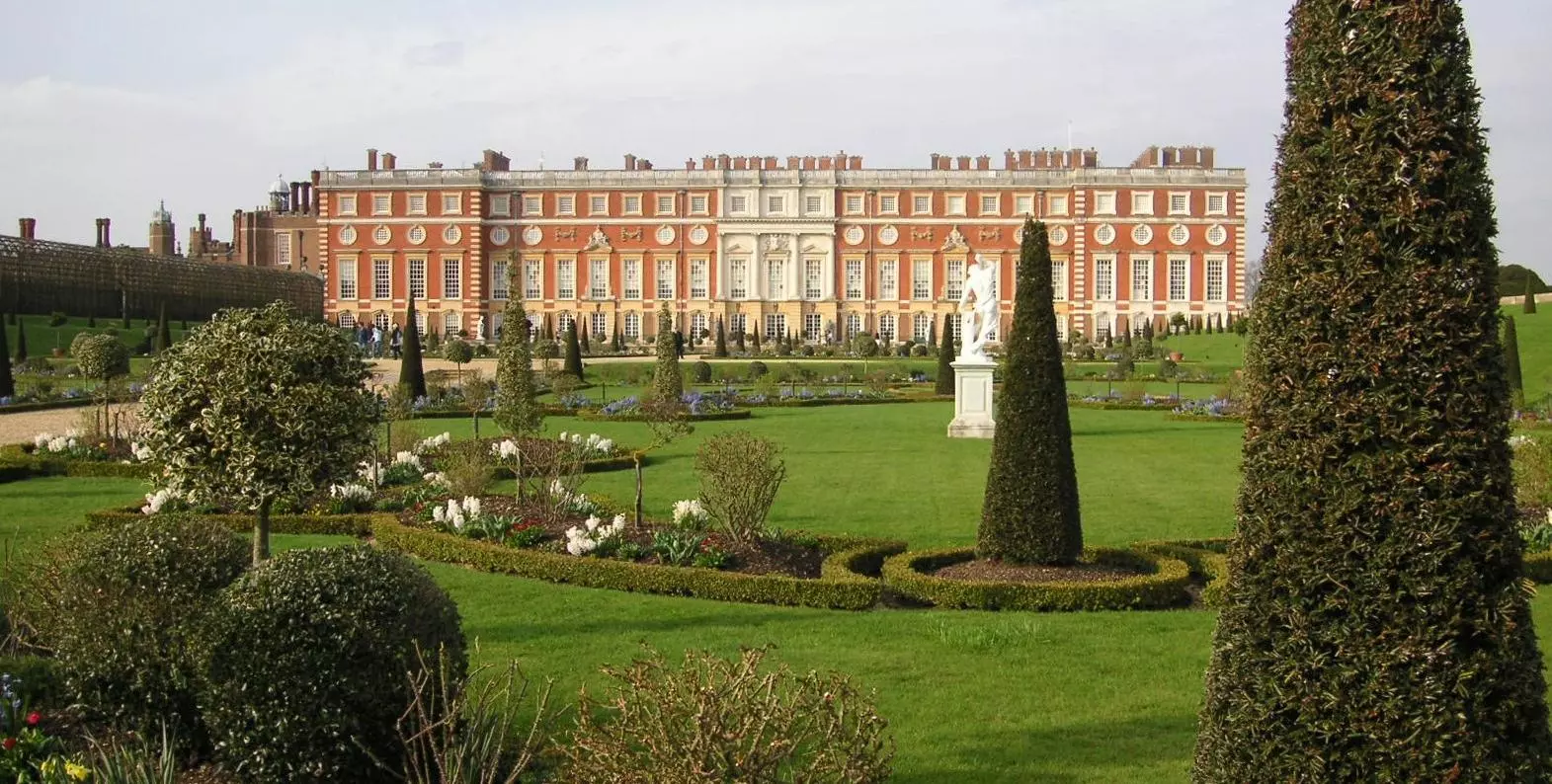
This subject deals with an outstanding period in the history of English architecture – that of Wren, Hawksmoor, Talman and Vanburgh: the period generally known as that of ‘the English Baroque’. It saw the building of St. Paul’s Cathedral, the London churches, Greenwich Hospital, several royal palaces (most notably Hampton Court), the remodelling of the State Apartments at Windsor, and many important country houses, including Blenheim, Chatsworth and Castle Howard.
Imperial Crisis and Reform, 1774-1784
The period of the War of American Independence was for the British Isles one of intense political crisis and division, bringing into question Britain’s capacity to maintain its status as a great European and world power, the future of its empire, and catalysing profound debates about domestic and public policy. This course examines the impact of the war on both imperial and domestic affairs, and the interplay between problems arising directly from the conflict and pre-existing tensions and concerns. Relations with North America, the rise and impact of volunteering in Ireland and the campaign for Irish parliamentary independence, the reshaping of relations between the British state and the East India Company, the reverberations of political conflict and war in the Caribbean, and the impact of the war on attitudes towards empire, will be investigated; as will the domestic political context, including the rise of a formidable extra-parliamentary reform movement (the Association Movement). Parliaments in this period debated and grappled with a wide range of domestic reform projects: renewed attempts were made to reform the poor laws; prisons, penal policy, and domestic policing arrangements became topics of intense public debate; the anti-slavery cause began to attract sustained attention, providing the context for the rise of the abolitionist movement; and Catholic and Protestant dissenters successfully sought relief from specific legal restrictions.
Becoming a Citizen, c. 1860-1902
People growing up between 1860 and 1902 lived through a period of fundamental transformations in citizenship: franchise reform that meant that for the first time working-class boys and girls might expect to grow up to vote, at least in local elections; the introduction of compulsory and free state education; the foundation of pioneering charities (such as the NSPCC) that both intervened in the lives of the poor and offered public roles to more elite women; and the growth of trade unions, co-operative associations and commercial companies that used children to attract people with increasing leisure time and spending power to their organizations.
Over the period the education, socialisation, protection and indoctrination of the next generation of citizens was increasingly prioritised. In determining how to mould future citizens, fundamental inequalities – of class, gender, religion, locality and ethnicity – were revealed, challenged, reshaped, or sustained. This paper draws on a rich historiography that charts the growing investment in the young by states, civil society and families. The paper places students at the forefront of current research, however, in also asking what children then did with this investment. The young may be reconceptualised as active agents in social, cultural and political change, rather than merely the passive subjects of these processes. We can thus establish, rather than assume, which attempts to mould the young were truly formative in making the people of Britain.
Race, Sex and Medicine in the Early Atlantic World
Anxieties about sexually transmitted disease arose alongside European imperialism during the fifteenth through nineteenth centuries, but these two developments have generally been treated separately by historians of the early Atlantic world. Yet the history of ideas about venereal disease is fundamentally entangled with the racial and sexual hierarchies that characterized the imperial project. British and French medical experts put forward theories about the origins of venereal disease that were imbued with racialized suppositions about the dangers of African and tropical women’s bodies; approaches to treating venereal disease in the slave societies of early America frequently served the additional purpose of enacting the racial hierarchies of plantation life; the knowledge of black healers was both a site of resistance to slavery and also of appropriation by slave owners; and therapies such as inoculation were treated by white doctors with both suspicion and intrigue insofar as they were seen as African therapies.
This subject will therefore explore the broader intersections between race, sex, and medicine in the early Atlantic, in order to provide a firm foundation for comprehending the history of venereal disease and empire. It will begin by considering how racial and sexual difference were understood by early modern medical experts, and how racial and sexual hierarchies shaped the history of empire and the lived experiences of enslaved men and women. The course will then move on to examine the provision of health care by white and black healers on North American and Caribbean plantations and in the Atlantic slave trade. The course will also grapple with the historical evolution of ideas about climate and contagion, and the circulation of knowledge about inoculation in the early Atlantic world. The course will culminate with readings that reflect specifically on race, sex, and venereal disease.
Art and its Public in France, 1815-67
This Special Subject is designed to enable students to study a wide range of artistic production in France in the period from the post-Napoleonic restoration to the international exhibition in Paris of 1867. This
is an exciting period, in which most of the contours of French artistic life were subject to debate, and in which artists responded closely to contemporary political and social developments. In turn, reviews of salon exhibitions and art criticism in general provided a context for lively discussion of aesthetic and ideological concerns. The role of the state – as patron and arbiter of artistic production – was contested, as were the structures of artistic education; a series of political revolutions was refracted in visual culture; urbanisation raised questions about landscape and the relations between town and country, and provided new theatres for visual display.
Slavery, Emancipation and the Crisis of the Union, 1848-1865
The Civil War is the defining event in American history and a conflict of such magnitude and importance that its effects were felt around the world. To many foreigners, no less than to Abraham Lincoln, the fate of liberty and the future of popular government rested on the outcome of the conflict in North America. In this course, we will ask how and why this war happened; how men and women—black and white, enslaved and free—experienced it; and how it ended as it did. We will read documents ranging from the letter of an African American man, now in the uniform of the United States army to his former ‘owner’ threatening to come and forcibly liberate his wife and child, to some of the greatest speeches in the English language—those made by Abraham Lincoln. This is a module that deals with one of the formative events of the modern world. It brought about the emancipation of over four million enslaved men and women—itself a part of a global process of the sometimes-violent transformation in the nature of labour during the nineteenth century. And this was also the age of nation-state formation, and in which, across the world, questions about revolution, popular government, and industrialisation were being fought out. The consistent thread in our discussions will be the figure of Lincoln: a man whose enigmatic qualities, whose own spiritual and political journey, and whose life experience as a frontier lawyer turned most unlikely of presidents, will often serve as a way into the wider issues.
Race, Religion and Resistance in the United States
The so-called secular age (where traditional forms of religion came under question) and the Jim Crow era (of state-sanctioned white supremacy) arose side by side in the United States during the early twentieth century. Hitherto scholars of religion, race and civil rights have invariably treated the two developments separately. But African Americans were involved in the debates about the nature or existence of God at least as much as white Americans. Indeed, for many, it was the horrors of white supremacy – especially because they met little criticism in a self-proclaimed Christian country – that prompted the urgent questioning of the faith of their fathers. The answers to these questions, which were varied, would have a profound impact upon the course of both civil rights protest and American Christianity.
This subject will explore the intersection between religion, ideas of race and anti-racist protest from the resurgence of white supremacy at the end of the 19th century through to the rise of the civil rights movement in the 1950s. It will begin by considering the imposition of the Jim Crow laws despite the presence of a Christian abolitionist and civil rights tradition that had been a major influence behind emancipation and the biracial post-Civil War Reconstruction settlement. The major part of the course will focus on various aspects of faith and racial politics during the Jim Crow era, in particular: the function of the African American church (by far the most influential black institution), the significance of liberal inter-racial church initiatives, the work of black churchwomen, the relationship between civil rights organisations and the churches, the impact of the secular turn on faith and protest in the African American community and the theological outlook of white supremacists. The course will end by reconsidering the religious foundations of the modern civil rights movement in the light of the debates and developments during the Jim Crow era.
Empire and Nation in Russia and the USSR, ca. 1890-1924
This paper follows the different peoples of the Russian empire across the revolutionary divide of 1917 and into the early years of the Soviet Union. Its focus is on how the Tsarist and Soviet regimes dealt with the management of difference and the challenge of nationalism. The 1897 census, the only complete survey of the empire’s population before the revolution, revealed that only 40% of its population was ethnically Russian. The remainder belonged to a bewildering variety of groups, some of which already thought of themselves as distinct nationalities: Ukrainians, Poles, Tatars, Jews, Armenians, Georgians, Qazaqs, Kyrgyz, Sarts, Turkmen, Buryats, and many, many more. They belonged to many different religious denominations – Orthodox, Catholic, Lutheran and Monophysite Christianity, Judaism, Shia and Sunni Islam, Buddhism and animism; and they spoke many different languages, Slavic, Turkic, Persian, Caucasian, Mongolian. The Ottoman and Habsburg empires, also multi-ethnic dynastic polities, collapsed under the stresses of war and were reconstituted as nation-states. The Russian empire also collapsed between 1917 and 1921, but was then reconstituted in a new and radical form. The Soviet solution to the ‘nationalities problem’ was radical, unique, and surprisingly long-lasting, allowing the empire to endure until 1991, with many sentimental and political ties remaining to this day.
Feminism in Britain, 1918-1939
When the Representation of the People Act finally granted (most) women the right to vote in 1918, feminists celebrated: but few thought their task was finished. The vote would enable them to pursue other long cherished objectives in search of greater equality and better lives for women. Historians have often been sceptical about the progress that feminists were able to make in these years, arguing that there was a post-war backlash against equality and renewed emphasis on domesticity, and that the women’s movement fragmented without the central goal of enfranchisement. Recent scholarship, however, has offered a more optimistic assessment of feminist achievement in this period. Together, we will examine the writings of key feminist thinkers and activists in this period, comparing and contrasting with the scholarly literature to identify what feminists wanted and why, how they chose to pursue their goals, and how far they were successful in realising them.
The End of Empire
This Special Subject explores the collapse of the USSR and the emergence of post-Soviet Eurasia. We examine the policies which transformed the region in the 1980s and the 1990s, as well as the lived experience of systemic reform and state collapse. The paper pays particular attention to the role of Soviet borderlands in the Caucasus, Central Asia, and Eastern Europe during perestroika and glasnost.
As the history of the end of the USSR remains understudied and politicised, our purpose is to examine how diverse groups in the USSR and its successor states engaged with reform and thus to recover both hopes and traumas of transformation. Each week focuses on an issue or a set of issues that bred controversy in the late Soviet era. We first trace debates about the desirable direction of economic reform. We then analyse how systemic transformations shaped different aspects of public life in Eurasia, paying particular attention to shifting notions of ‘citizenship’, attitudes to work and entrepreneurship, and the role of atheism, Russian Orthodoxy, and Islam in late twentieth-century Eurasia. The paper further explores imperial and anti-colonial mindsets, investigating the history of war and xenophobia. Finally, we reflect on the changing parameters of social exclusion, discussing gender, sexual, and generational identities, as well as the impact of environmental disasters on late Soviet and early post-Soviet societies.
Because perestroika and glasnost have received less attention from historians than earlier eras of Soviet history, our chronological focus offers particularly rich opportunities to produce independent, original analyses of primary evidence. Students will gain experience handling diverse sources. To identify the forces which shaped Eurasian politics and economics, we explore documents produced by Soviet state and Communist Party officials, organisations and individuals outside the USSR, and memoirs written after 1991. To examine the evolution of Soviet public culture in the late twentieth century, we explore newspaper articles, television broadcasts, films, and novels. KGB surveillance reports, citizens’ letters to various Soviet institutions, underground publications, public opinion polls, and oral history interviews allow us to gauge diverse responses to the collapse of Soviet order in Eurasia.
Although the paper concentrates on the period between Mikhail Gorbachev’s ascension to power in 1985 and the disintegration of the USSR in 1991, it also questions conventional chronological frameworks. Engaging with rich historical literature on de-Stalinisation and the Brezhnev era, as well as with interdisciplinary work on the post-Soviet 1990s, we place the Gorbachev years in the context of long-term developments which transformed Eurasia between the 1960s, when the first generation born after the Second World War came of age, to the post-Soviet upheavals of the 1990s.
From Gandhi to the Green Revolution
Between the late 1930s and the late 1960s, the Indian National Congress dominated the political terrain of modern India. Yet during those thirty years of apparent hegemony the debate about the nature of modernity in India was unceasing. Gandhi and Nehru represent the two poles of thought – the former a romantic critic of western modernity in its political, cultural and economic forms, the latter its greatest champion. Many other voices and movements continued to contest the meanings and manifestations of the modern in the post-colonial Indian state.
Certain key themes shaped these conflicts: the relationship between ‘tradition’ and ‘modernity’; ‘real’ or village India, versus the city; the tension between the ‘national’ and the ‘cosmopolitan’; the place of science and development; and role of culture (both high and popular), in informing conceptions of modern citizenship. These debates were not confined to the rarefied sphere of professional intellectuals but played out on the streets of India’s cities, in its cinema halls, during elections, in the disputes over the dramatic impact of ‘modern’ development in the countryside and in the new aesthetics and rituals of India’s democratic process.
The Spanish Civil War in Context
The Spanish Civil War was the crucible of interwar Europe, in which rival ideological projects of social, economic political organisation – from Communism to Fascism, Catholic corporatism to Social Democracy – fought on the battlefield and on the home front. This paper examines the Spanish Civil War within its immediate context, from the reformist hopes invested in the democratic Second Republic (1931-6) and the austere, hungry early phase of the Francoist dictatorship (1939-48). Our approach will be to study this period from the ‘inside-out’. While acknowledging that the War was an international conflict which sparked the involvement of thousands of volunteers, our focus will be on the roots, experience and effects of the conflict from a domestic perspective.
The first three classes cover an introduction to Spain in 1931, the different political and cultural projects during the Republic, and the evolution and episodes of conflict prior to the War. We then turn to violence, state-building and everyday life during the Civil War, before analysing the nature of the Francoist regime and how Spaniards negotiated the new dictatorial context. Tutorials on a choice of topics, including the Francoist ‘Crusade’, the tensions in rural society, Republican propaganda and the black market, will allow a deeper engagement with themes discussed in the classes. Underpinning the paper are interlocking themes, including the state, power and the individual; revolutionary, counter-revolutionary and democratic politics; secular-religious conflict; gender; the meaning and uses of violence; and the relationship between everyday life and politics.
Nazi Germany, a Racial Order, 1933 to 1945
This paper focuses particularly on the Nazi consolidation of power, racial policy, the war and the holocaust, drawing on a wide range of documents in order to explore both the individual and the social dimensions of events.
France from the Popular Front to the Liberation 1936 to 1944
This Special Subject deals with perhaps the most exciting and controversial episode in contemporary French history: when the Third Republic collapsed under the weight of its own contradictions and France was defeated in a lightning war. The country was occupied by the Germans and a puppet French state was set up at Vichy under First World War hero Marshal Pétain who tried to push through a National Revolution to regenerate what was seen as a decadent France. This included the cooperation of the French state with the Germans in the round-up and deportation of Jews to the death camps. In London, General de Gaulle called for the war to continue and formed the Free French who battled with the Vichy regime for control of the French Empire. The French population divided between a minority who collaborated with the Germans in pursuit of a new Europe, a minority – inspired by de Gaulle or the courage of the Red Army - who resisted foreign occupation and humiliation and a majority who muddled through until France was liberated by the Allies.
War and Reconstruction
The Second World War was an era of intense intellectual and popular debate about politics, culture, social and economic policy and the future shape of British society. These debates stemmed partly from the immediate circumstances of the war itself (the Blitz and the ‘People’s War’), partly from reappraisals of the legacy of the inter-war years and partly from a sense of wider international crisis. They ranged over such issues as the wartime and post-war role of the state; Keynesianism and economic planning, relations between ‘high’ and ‘low’ culture and changes in education, family policy, housing, and town planning. Major participants included Keynes and Hayek, Beveridge and Eleanor Rathbone, T. S. Eliot and Karl Mannheim, William Temple and Harold Laski, the London Women’s Parliament and Mass Observation.
Society, Culture, and Politics in Socialist China
This special subject covers socialist China from 1949, the year of the establishment of the People’s Republic of China, until 1992, the year Deng Xiaoping—worried by the demise of the Soviet Union—accelerated marketization and his plans for “socialism with Chinese characteristics”. In October 1949, Mao Zedong famously proclaimed the establishment of “New China” at Tian’anmen Gate in the heart of Beijing. Over the next decades, people across the country worked to “build socialism”. How exactly socialist China would look like and how the country might eventually reach communism was fervently debated. The young People’s Republic was an extremely poor country, ravaged by years of war and civil war, trying to achieve what seemed unthinkable to many at the time: to create revolutionary change despite widespread poverty, and to create a strong de-colonised nation with little support except from fellow communist countries, many of which in earlier years had been deeply critical of the Chinese Communist Party. Some in China believed the only way to create revolutionary change was through major mass mobilization campaigns; others thought that social, cultural, and economic transformations would have to be pursued consistently across years. These different ideas about the “road to socialism” affected the lives of everyone – from residents in urban work units to people living and working in rural villages, people across different ages, genders, and ethnicities. At times they were swept up in mass campaigns: including land reform, the Great Leap Forward, socialist education, and the Cultural Revolution. These created deep ruptures in the fabric of life. At other times, people’s experiences were marked not by revolution but by hard work, and for many a struggle to ensure subsistence; a grinding process of small tasks that to many seemed to lead nowhere. The party promised an eventual cornucopia at the end of the road, if everyone made sacrifices and contributed to the larger goal of building a new country. But as the years went on, that cornucopia seemed to fade into the distance.
Profound changes came with Mao Zedong’s death in 1976. Once more, party leaders told people that they would build “New China” and socialism, now with a new approach: the country would “open” and “reform”, seek expertise internationally, substantially invest in more than only heavy industry, and improve national living standards. The goal of the Mao period had been self-sufficiency and extreme frugality, now the aim was to combine a “socialist material civilization” and “socialist spiritual civilization”. People’s daily lives again transformed dramatically as the party abandoned mass campaigns, emphasised economic reforms, steady growth, and gradual marketization. Yet these reforms also destroyed many of the employment and housing securities built during the Mao period, a process widely known as the “breaking of the iron rice bowl”. By the late 1980s, the early promises of reform and opening had dissipated as rising unemployment and inflation greatly worried those whom the Party claimed to represent: workers and peasants. They took to the streets calling for the government to live up to its own assurances that socialism would protect the broad population, only to be punished violently.
Cold War: Art And Politics in a Divided World, 1945-89
The course examines how art, criticism and theory intersected with politics and power during the Cold War. It traces cultural agendas shaped from above between 1945-67, including debates over abstraction and realism, competing cultural hegemonies across the Iron Curtain, and artists’ roles in decolonisation and post‑war alliances such as Pan‑Africanism and the Non‑Aligned Movement. From 1968-89, the course turns to cultural and political contestation from below, examining alternative and experimental art forms that critiqued institutions, subverted censorship and challenged political dogmas, with a focus on Eastern Europe and Latin America. Throughout, we reflect on how forces such as individualism, collectivism, nationalism, imperialism and technological development shaped the modern world and continue to define it today.
Pop and the Art of the Sixties
The course will examine aspects of Pop Art and other related art movements from the later 1950s to the early 1970s. The primary focus will be on British and American Pop Art, but attention will also be given to developments in other sites (e.g. France, South America, Asia). Prescribed materials will include both texts and numerous images. Prescribed texts will include the writings of artists and critics and period discussions of issues ranging from the mass media to the Vietnam War. Topics will include the relationship between art and mass culture; the avant-garde’s relationship with and/or contestation of the art market; art’s engagement with race, gender, and sexual orientation and the important role played by female, BME and queer artists; and the impact of May 1968 and the Vietnam War on art.
The Northern Ireland Troubles 1965 to 1985
This course analyses the politics, culture and violence of the Northern Ireland Troubles. Taking the premiership of Terence O’Neill in the 1960s as its starting-point, it considers the Civil Rights Movement, the emergence of the Provos, Bloody Sunday, Sunningdale, Ulsterization, and the Hunger Strikes, concluding with the Anglo-Irish Agreement of 1985.
Britain in the Seventies
The 1970s were a traumatic transitional period for Britain. The twin threats of uncontainable inflation and unemployment led policy-makers to reject the welfarist and Keynesian remedies that had predominated since the Second World War, and to move towards neo-liberal policies. Economic underperformance accelerated the decline of traditional industrial areas, creating an ‘inner city problem.’ Women, ethnic minorities, and homosexuals all became more assertive in demanding recognition of their needs and identities. Resurgent nationalism in Scotland, Wales and Northern Ireland threatened the integrity of the United Kingdom, while EEC entry raised new dilemmas about Britain’s national identity. Successive governments’ authority was challenged by trade union militancy, left- and right-wing extremism, and by their own seeming inability to address the country’s problems.
Neoliberalism and Postmodernism: Ideas, Politics and Culture
This course allows students to explore the major cultural and intellectual trends that affected Europe (both East and West) and North America between c. 1970 and c. 2000. Its main theme is the crisis of a number of ‘modernist’ ideologies and cultural outlooks – Social Democracy, Marxism and cultural modernism – and the rise of alternatives, including ‘identity’ politics, neoliberalism, and cultural postmodernism. We will examine several issues, including the rise of new social movements (ecological, feminist, gay rights); the debate over the role of markets and the state in the economy; multiculturalism and national identity; consumerism and individualism; computer technology and work; and the place of human rights in foreign policy.
Revolutions of 1989
Few recent historical events have generated as much international interest and attention as the dismantling of the Berlin Wall in 1989 and its legacy for the remaking of Central and Eastern Europe.
The upheavals across Eastern Europe have recently celebrated their 25th anniversary, as they have moved from current affairs to a subject of historical investigation in its own right. Even so, this colourful episode enjoys only brief and often cursory treatment in European history surveys and mainstream histories of 20th century Europe. This course is designed to introduce students to the momentous changes leading up to the events of 1989 as well as the on-going reconstitution of Central Europe after the Cold War. Various ex-East Bloc countries will be examined in some detail, and a good deal of attention will focus upon assessing the complex role and meaning of German Reunification within German, European and global history.
Art and Politics
This course is designed not only to present a survey of Chinese art but also to provide students with a chance to learn how to read social programs of Chinese history represented in visual language. In order to do this, the course asks students to think of questions, such as “Why does a particular artifact look the way it does?” “Who made it and who obtained it?” “Where was it displayed and for what purpose?” “Who decided what was acceptable and who, if anyone, challenged established styles of production?” Rather than seeing artwork as a passive indicator of changing artistic norms and paradigms, students will learn to interpret images and art critical writing as vehicles through which diverse social groups negotiate competing values and social norms. The issues of power, class, taste, gender, political debate, social criticism, and public opinions throughout Chinese history will be discussed in the class in order to let students understand that art and society are not two separate entities, but they are related to each other in many ways.
Art and the Invention of Race
For centuries, art and visual culture have worked together with economic, scientific, political and religious factors to shape and re-shape what we call ‘race’. While scholars continue to debate the precise origin point and geographical location for the invention of racial difference, this course takes a less comprehensive view. Focusing on the Anglo-American world, we will look at a series of interconnected episodes in this complex history, exploring art’s often underappreciated role in bringing forth, nourishing and sustaining hierarchies based on skin colour and ancestry.
Dating from the mid 18th to the early 20th century, prescribed materials include images of paintings, sculptures, prints and photographs, which will be analysed alongside a variety of contemporaneous written texts, from cultural criticism to scientific literature, novellas and plays. We will begin by looking at the fabrication of Whiteness via oil paint, specifically portraits of female sitters. We will go on to examine the role of satire in sharpening racial divisions before looking at the emergence of racial science, sculpture and polychromy, the fashion for the American Indian figure, racial ambiguity, and the use of the camera to unsettle stereotypical images established in traditional media. We will end with a consideration of how the racialised myths and fantasies we have explored in previous weeks are intimately entangled with the emergence of Art History as an academic discipline.