Professor Tehila Sasson
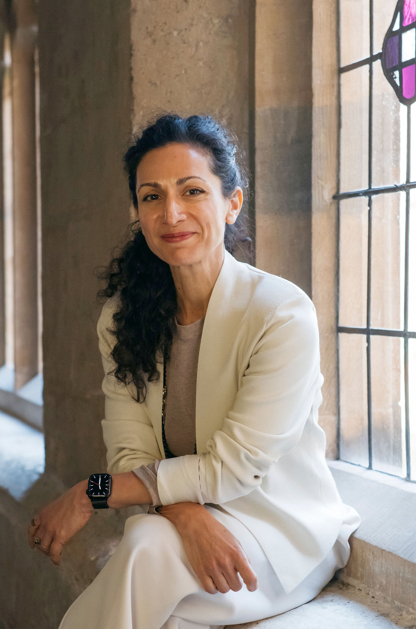
Associate Professor and Tutorial Fellow
Wadham College
tehila.sasson@history.ox.ac.uk
I am a historian of modern Britain, its empire and the global economy, from the 1850s to the present. I'm interested in inequality: how it gets built into markets, laws and institutions, and how people live with it, whether on a high street in Manchester or a factory floor in Ahmedabad. I write British history in a global frame, following the paper trail from local stories out to the international arrangements that shaped them.
Research Interests
- Modern Britain and its empire
- The history of capitalism and political economy
- Economic thought and the law of the economy
- Humanitarianism, charities and development
- Decolonization and neoliberalism
- Work, gender and the economy
My first book, The Solidarity Economy: Nonprofits and the Making of Neoliberalism after Empire (Princeton, 2024), is about what happened when charities went into business. From the 1950s, Oxfam, Christian Aid, War on Want and others built "solidarity markets" in handicrafts, tea and coffee, selling goods made in the former empire to shoppers in Britain. By the 1980s they were promoting microfinance. The book shows how these ventures, meant to make trade fairer, helped to make the neoliberal economy, and often deepened the inequalities they set out to address. It was shortlisted for the Economic History Society's book prize, and a related article on the Nestlé boycott, in the American Historical Review, won the Bernath Prize.
I am now working on three questions. The first is about currency: how the old bond between money and sovereignty was remade in the twentieth century, and why that bond looks less certain today. The second is about debt: how working-class and ethnic minority communities lived with credit, debt and the financialization of everyday life. The third is about natural resources: how the struggle to own and extract water, minerals and oil became a central part of international politics in the twentieth century. I also keep up long-standing interests in labor and deindustrialization, gender and economics, and the history of feminism.
Before coming to Oxford and Wadham in 2024, I was Assistant Professor of Britain and the World at Emory University. I did my PhD at Berkeley, followed by a Past & Present fellowship at the Institute of Historical Research and a research associateship at the Centre for History and Economics in Cambridge. I co-edit Modern British History and sit on the editorial board of Bloomsbury's Histories of Internationalism series. My work has been supported by the British Academy, the National Endowment for the Humanities, the Mellon Foundation and the American Historical Association.
Publications
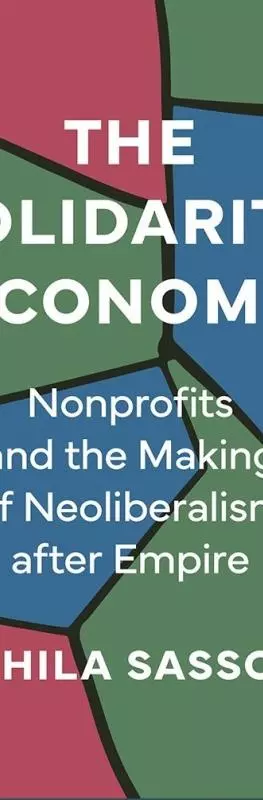
The Solidarity Economy: Nonprofits and the Making of Neoliberalism after Empire
After India gained independence in 1947, Britain reinvented its role in the global economy through nongovernmental aid organizations. Utilizing existing imperial networks and colonial bureaucracy, the nonprofit sector sought an ethical capitalism, one that would equalize relationships between British consumers and Third World producers as the age of empire was ending. The Solidarity Economy examines the role of nonstate actors in the major transformations of the world economy in the postwar era, showing how British NGOs charted a path to neoliberalism in their pursuit of ethical markets.
DPhil Students
I enjoy working with students on dissertations and research projects, and I'm glad to hear from anyone interested in:
- Britain and its empire in the world economy since 1850
- Money, credit and debt
- Development and decolonization
- Consumer politics, boycotts and fair trade
- Labor, unemployment and deindustrialization
- Neoliberalism and late twentieth-century Britain
- Natural resources and how they have been governed