
Professor Steven Gunn
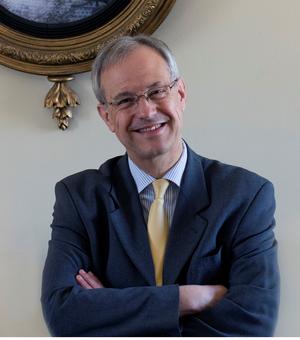
Fellow and Tutor in History, Merton College and Professor of Early Modern History
Merton College
01865 (2)76350
I teach and research the history of later medieval and early modern Britain and Europe. My recent research concerns accidental death and everyday life in sixteenth-century England. I have also published in the wider fields of Tudor government, warfare, foreign policy and political culture and the comparison of the English state in this period with others in Europe. I write for BBC History Magazine and History Today, have contributed to radio and television programmes such as In Our Time and Time Team, and speak regularly to Historical Association branches and sixth-form conferences. I am currently a trustee of the Royal Armouries.
Research Interests
My books include Charles Brandon, Duke of Suffolk c.1484-1545 (Oxford, 1988), Early Tudor Government, 1485-1558 (Basingstoke, 1995), (with David Grummitt and Hans Cools) War, State and Society in England and the Netherlands, 1477-1559 (Oxford, 2007), Henry VII's New Men and the Making of Tudor England (Oxford, 2016) and The English People at War in the Age of Henry VIII (Oxford, 2018), a revised version of the James Ford lectures in British history which I delivered in 2015. I have edited volumes on Cardinal Wolsey, Arthur Tudor, Prince of Wales and the courts of England and the Low Countries in the Later Middle Ages.
My most recent book, written with Tomasz Gromelski, is An Accidental History of Tudor England: From Daily Life to Sudden Death (London, 2025). Other publications derived from the Economic and Social Research Council project which underlay the book include ‘Sport and recreation in sixteenth-century England: the evidence of accidental deaths’ in Sports and Physical Exercise in Early Modern Culture, edited by Angela Schattner and Rebekka von Mallinckrodt (Abingdon, 2016), 49-63, ‘Coroners’ inquest juries in sixteenth-century England’, Continuity and Change, 37 (2022), 365-88 and ‘Firearms accidents in sixteenth-century England’, Arms and Armour, 20 (2023), 149-59.
My current research falls into three areas. Having used coroners’ inquests to investigate everyday life, I am now using them to ask what deaths in prison tell us about Tudor imprisonment. Meanwhile I am starting work on the relationship between aristocratic power and the patronage of renaissance culture in sixteenth-century Europe north of the Alps. I retain a long-term research interest in the reign of Henry VII.
Publications
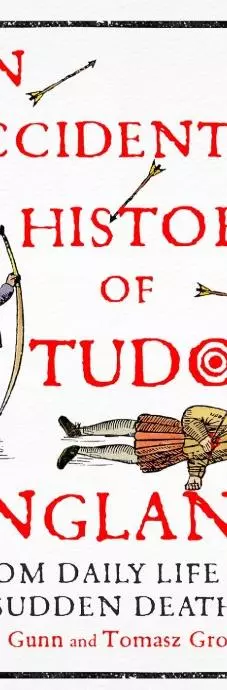
An Accidental History of Tudor England: From Daily Life to Sudden Death
with Tomasz Gromelski
How did ordinary people live in Tudor England? This unique history unearths the ways they died to find out.Uncovering thousands of coroners' reports, An Accidental History of Tudor England explores the history of everyday life, and everyday death, in a world far from the intrigues of Hampton Court Palace, Shakespeare's plots and the Spanish Armada. Here, farming, building and travel were dangerous. Fruit trees killed more people than guns, and sheep killed about the same number as coalmines. Men stabbed themselves playing football and women drowned in hundreds fetching water.
DPhil Students
I would like to hear from potential DPhil students regarding later medieval and early modern British and European history or any potential Masters students looking into the same period.
In the Media
- 16 Jun 2025 - Not Just the Tudors: Accidental Deaths in Tudor England - BBC Sounds
- 10 April 2018 - Cunk on Britain: The Empire Strikes Back- BBC
- 24 February 2017 - BBC Great Lives: Henry VII - BBC Radio 4
- Hilary Term 2015 - Ford lectures 2015: The English People at War in the Age of Henry VIII - University of Oxford Podcasts
- Everyday death in Shakespeare's England - University of Oxford Podcasts
- 'Accidental Death in Tudor England' - University of Oxford Podcasts - Professor Steven Gunn and Dr Tomasz Gromelski gives a TORCH bite-size talk at the Ashmolean Museum's DEADFriday event