Professor Paul Betts
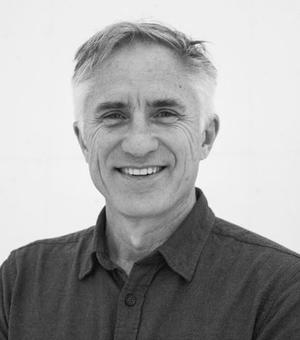
Professor of Modern European History
St Antony's College
01865 (2)74534
My research and publications centre on Modern European Cultural History in general and 20th Century German History in particular. I am especially interested in the relationship between culture and politics over the course of the century, and have worked on the themes of material culture, cultural diplomacy, photography, memory and nostalgia, human rights and international justice, the history of ideas and changing notions of private life.
At the moment I am writing a socio-cultural history of 1989 with Penguin (UK) and Harvard University Press (US).
I was Visiting Fellow at the Ludwig-Maximilians-Universität in Munich in 2019 and 2024; Visiting Fellow at Sciences Po, Paris, in Spring 2022 and Chaire Ganshof van der Meersch, Wiener Ansbach Fellow, University of Brussels, in February 2022.
I serve on the Beirat of the GHI in London and the ZZF in Potsdam, and am on the Editorial Board of Past & Present and the Journal of Contemporary History, and am Editor for the ‘New Approaches to Modern German History’ Series at Berghahn Books.
Research Interests
- Continental Europe in the nineteenth and twentieth centuries
- Global history
I am also working on a research grant project: Global Catholicism: The Papacy of Pope Pius XII.
Currently I am writing a socio-cultural history of 1989 with Penguin (UK) and Harvard University Press (US).
In autumn 2024 I am a Visiting Fellow at Ludwig-Maximilians-Universität in Munich.
Published books include:
- Socialism Goes Global: The Soviet Union and Eastern Europe in the Age of Decolonisation, jointly written with James Mark et al (Oxford: OUP), January 2022
- Ruin and Renewal: Civilizing Europe after World War II (New York: Basic Books/ London: Profile Books, 2020), which was awarded the Jacques Barzun Prize for Cultural History by the American Philosophical Society, Philadelphia, 2021
- Within Walls: Private Life in the German Democratic Republic (Oxford: Oxford University Press, 2010; paperback, 2012), which was awarded the Fraenkel Prize in Contemporary History by the Wiener Library
- The Authority of Everyday Objects: A Cultural History of West German Industrial Design (Berkeley: University of California Press, 2004; paperback, 2007).
I have also co-edited seven volumes:
- Rethinking Socialist Space in the 20th Century (London, 2024), with Marcus Colla
- The Ethics of Seeing: Photography and 20th Century German History (Berghahn, 2017), with Jennifer Evans and Stefan-Ludwig Hoffmann
- Religion, Science and Communism in Cold War Europe (Palgrave, 2016), with Stephen A. Smith
- Heritage in the Modern World: Historical Preservation in International Perspective, Past & Present Supplement 10 (OUP, 2015), with Corey Ross
- Years of Persecution, Years of Extermination: Saul Friedländer and the Future of Holocaust Studies (Continuum, 2010), with Christian Wiese
- Between Mass Death and Individual Loss: The Place of the Dead in Twentieth-Century Germany (Berghahn Books, 2008; pb, 2011), with Alon Confino and Dirk Schumann
- Socialist Modern: East German Everyday Culture and Politics (University of Michigan Press, 2008), with Katherine Pence
- Pain and Prosperity: Reconsidering Twentieth Century German History (Stanford University Press, 2003), with Greg Eghigian
Co-Curator, traveling exhibition and catalogue, Tito in Africa: Picturing Solidarity, Museum of Yugoslavia, Belgrade (June-September 2017), Pitt Rivers Museum, Oxford (November 2017-March 2018), Die Wende Museum, Los Angeles (Spring 2019).
I was Chair of the German History Society (2011-2014), and co-edited the journal German History, 2004-2009. Since 2009 I have served on the Editorial Board of Past & Present.
I am Series Editor of New Directions in German History, Berghahn Books, 2012-, and was Series Co-Editor, St Antony’s Series, Palgrave Macmillan 2013-2016.
I was Director of St Antony’s European Studies Centre, 2015-2017.
Publications
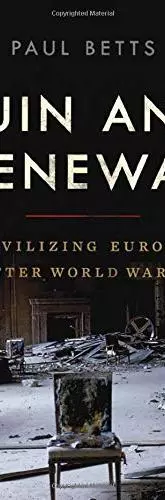
Ruin and Renewal: Civilising Europe After the Second World War
1945. Europe lies in ruins - its cities and towns destroyed by conflict, its economies crippled, its societies ripped apart by war and violence. In the wake of the physical devastation came profound moral questions: how could Europe - once proudly confident of its place at the heart of the 'civilised world' - have done this to itself? And what did it mean that it had?