
Professor Nancy Thebaut
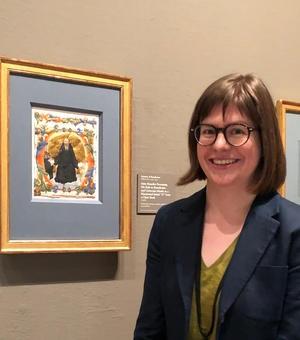
Associate Professor in the History of Art
St Catherine's College
Research Interests
My current book project, Lessons in Looking: Difficult Images of Christ, ca. 850-1050, studies a selection of narrative images in liturgical manuscripts that depict moments at which seeing Christ is at stake. It explores how artists became increasingly interested in representing the difficulty of vision and belief in ways that honed their viewers’ ability to apprehend Christ. A second book project focuses on images of Lot’s wife, specifically the moment at which she looks back at the destruction of Sodom and Gomorrah and turns into a pillar of salt.
I am also committed to bringing art history to a broad public through curatorial work. Melanie Holcomb and I are co-curating an exhibition on gender, sexuality, and love in medieval art that will open at The Cloisters (Metropolitan Museum of Art, New York) in 2025. I have also pursued curatorial projects at the Tang Teaching Museum, Art Institute of Chicago, Musée Carnavalet, and Musée de Cluny.
Prior to joining Oxford, I was Assistant Professor of Art History at Skidmore College. I earned my PhD from the University of Chicago, an MA from the Ecole du Louvre and Courtauld Institute, and a BA from Agnes Scott College. My work has been supported by various grants, including a US Fulbright Scholarship at the Centre d’études supérieures de civilisation médiévale at the University of Poitiers, a NOMIS fellowship at eikones (University of Basel), and a Kress Foundation History of Art Institutional Fellowship at the Institut national d’histoire de l’art (Paris).
I am interested in supervising research on a range of object types and topics, including pre-1200 manuscript illuminations and ivory carvings; medieval art and liturgy; and gender and sexuality.
Publications
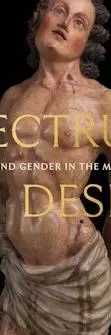
Spectrum of Desire: Love, Sex, and Gender in the Middle Ages
Reframing medieval art through the lens of queer theory, this pioneering volume sharpens our understanding of conceptions of gender, the body, and eroticism across three centuries
This pioneering volume explores concepts of gender, sexuality, and love as portrayed in sculptures, paintings, manuscripts, and personal items to reveal the hidden sexuality and sensuality of medieval art. Using the critical approach known as queer theory, which offers a way to think more expansively about the past, the book interrogates aspects art and culture of the Middle Ages that are often overlooked, such as nonconformist sexual practices, gender variance, and power plays within human and divine relationships.