

Professor Giora Sternberg

Associate Professor of Early Modern History (1500–1800)
Hertford College
giora.sternberg@hertford.ox.ac.uk
I studied at Tel-Aviv University (BSc in Computer Science and Humanities; MA in History) and at the University of Oxford (DPhil in History). Subsequently, I was a Junior Fellow at the Harvard Society of Fellows, before taking up my current position in 2012.
Research Interests
Broadly speaking, my work explores the intersections among the political, the social, and the cultural, primarily in the context of Ancien Régime France during the seventeenth and eighteenth centuries. I am especially intrigued by the possibilities – and challenges – of offering systematic accounts of the practices of early modern actors through deep archival research.
Applying this approach to practices of writing provides not only a better understanding of early modern action, but also a crucial methodological tool for the study of documents, one of the most important forms of historical source. My latest monograph, Writing Acts: The Power of Writing in the Ancien Régime (OUP, 2026), examines the direct impact of manuscript documents – considered as material objects as well as verbal texts – on the lives and struggles of the Ancien Régime. Cutting across typical divides of historical inquiry, it relates macro and micro, elites and commoners, centre and periphery. Writing acts enabled parties across the social spectrum to subvert all forms of power dynamics: between rulers and subjects, superiors and inferiors, parents and children.
My first monograph, Status Interaction during the Reign of Louis XIV (OUP, 2014), investigated how and why individuals and groups expressed, shaped, and contested social positions in a variety of contexts, ranging from high ceremonies to everyday routines like correspondence. From a twenty-first-century perspective, questions such as spatial precedence, sartorial rights, or linguistic forms of address may appear insignificant. For early moderns, however, they operated as key tools for defining and redefining identities, relations, and power. The book deciphers these sophisticated and often implicit codes at one of their most famous historical arenas: aristocratic society at the time of Louis XIV.
My work has also appeared in Past & Present, The Journal of Modern History, The English Historical Review, and The American Historical Review. At Oxford, I have for many years been serving as co-convenor of the Early Modern World Seminar and am currently the Research Director of the Oxford Centre for European History.
Publications
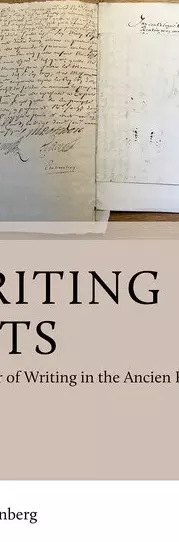
Writing Acts: The Power of Writing in the Ancien Régime
Writing was part of the fabric of the early modern European world, and remains an indispensable source for its historians. But what gave writings their power in the past, and how should this shape our engagement with them in the present? Going beyond the familiar themes and narratives of the printed public sphere or the rise of the information state, Writing Acts examines the direct impact of manuscript documents on the lives and struggles of the Ancien Régime. The study of writing acts, Giora Sternberg argues, illuminates fundamental aspects of early modern agency that cut across typical divides of historical inquiry, relating macro and micro, elites and commoners, centre and periphery. Writing Acts develops a framework for reconstituting early modern sources as the forms of action they once were. Rethinking the relations among writing, action, and power, it casts the Ancien Régime in a new light and offers a guide for anyone trying to make sense of its documents.
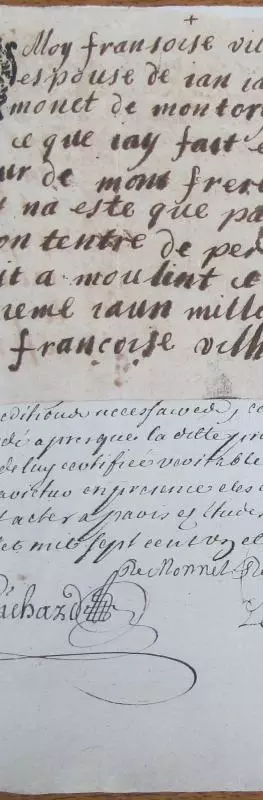
Journal Article: Writing to Undo: Protestation as a Mode of Early Modern Resistance
This study investigates protestations as a unique lens into the workings of coercion and resistance in the early modern period. Protestation was a wide-ranging genre of document, written to counter the consequences of coercive forces in myriad forms: familial, economic, religious, and political; on the levels of micro and macro; and across social and geographical space. The article interrogates protestations as material objects as well as verbal texts; follows them throughout their lifecycle; and explores their spectra of producers, protagonists, and functions. Protestation is thus shown to be of wide interest to a broad swath of scholars, including historians of gender, family, working-people, elites, high politics, law, and writing.
DPhil Students
I welcome prospective DPhil and MSt/MPhil students in early modern history (1500–1800), especially those with interests in France and its colonies, or more broadly in themes such as the history of writing, media, and archives, material culture, social history, symbolic interaction, historical methodology, and the history of knowledge and information.