Professor Eduardo Posada-Carbó

Professor of the History and Politics of Latin America & William Golding Senior Fellow of Brasenose
Brasenose College, The Latin American Centre
https://www.lac.ox.ac.uk/article/latin-america-and-the-global-history-of-democracy
I have been Tinker Professor of Latin American History at Chicago University, Cogut Visiting Professor of Latin American Studies at Brown University, and Visiting Fellow at the Kellingg Institute in the University of Notre Dame. I graduated in Law at the Universidad Javeriana in Bogotá, Colombia, and then completed post-graduate studies in Oxford: MPhil in Latin American Studies and DPhil in Modern History.
Since 2013, I have convened the Latin American History Seminar, housed at the Oxford Latin American Centre.
Publications
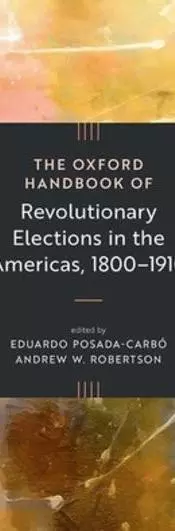
The Oxford Handbook of Revolutionary Elections in the Americas, 1800–1910
Eduardo Posada-Carbó (ed.) & Andrew W Robertson (ed.)
This book offers an examination of “revolutionary elections” in the Americas between 1800 and 1910. “Revolutionary elections” are pivotal electoral episodes whose contested and contentious nature led to outcomes that were highly consequential for the politics and societies in the countries in which they took place, as they helped to inaugurate or transform institutions, to settle substantial issues at stake, or to change political behavior. The book is divided in three parts. Part I offers general overviews of the electoral histories of the United States, Latin America, and Canada. The chapters in Part II examine twenty cases of revolutionary elections covering a wide range of countries in the Americas during the long nineteenth century. The chapters in Part III offer some comparative and interdisciplinary perspectives on key aspects of revolutionary elections in the Americas.
DPhil Students
I am interested in supervising research students working on any aspect of the history of democracy in Latin America during the xixth and xxth centuries.