Professor Alan Strathern
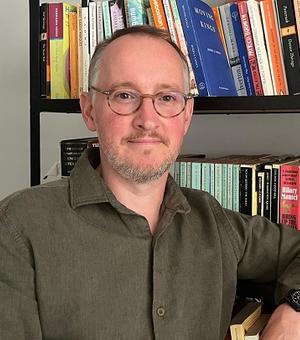
Professor of Global History
Brasenose College
01865 (2)77877
alan.strathern@history.ox.ac.uk
I work on the global history of religious change and its relationship with politics, particularly in the early modern period. My recent book, Converting Rulers: Global Patterns 1450-1850 (2024), helps explain the religious map of the world today by analysing why rulers of some regions converted to Christianity and others did not. Its central case studies are Kongo, Japan, Thailand and Hawaii. This is a companion to a more theoretical book about religious change and its relationship with politics across all of world history, Unearthly Powers: Religious and Political Change in World History (2019). I first specialised in Sri Lankan history, as in my first monograph, Kingship and Conversion in Sixteenth Century Sri Lanka (2007), and articles on such themes as origin myths, source criticism, sacred kingship, and ethnic identity.
I teach both European and Global History as a Fellow at Brasenose College, and a Lecturer at St John's College. I'm happy to consider DPhil supervision across a wide range of areas in the early modern world.
Research Interests
- Religious Conversion
- Ethnic Identity
- Global Comparative History
I work in the global history of religious change and encounter. My latest book, Converting Rulers: Global Patterns 1450-1850 (Cambridge 2024), analyses why the rulers of some regions converted to Christianity and others did not, with central case studies on Kongo, Japan, Thailand and Hawaii, although it also ranges more widely. It functions as a companion to a more general book which came out in 2019. Unearthly Powers: Religious and Political Change in World History (Cambridge), drew on anthropology and sociology to put forward a new theoretical understanding of religion and its relationship with politics across pre-modern history, and was awarded the World History Association Bentley Book Prize for 2020. Underlying both books is a large question: Why does the religious map of the world today look the way it does? Why, for example, did large stretches of Asia remain immune to monotheism? In two or three publications, I have also begun to extend this line of thinking to the expansion of Islam.
Much of my primary research has concerned those parts of the world that came into contact with European seaborne expansion in the early modern period c. 1500-1800. I first specialised in Sri Lankan history, as in my first monograph, Kingship and Conversion in Sixteenth Century Sri Lanka: Portuguese Imperialism in a Buddhist Land (Cambridge 2007), and articles on such themes as origin myths, source criticism, and the development of ethnic consciousness. More recently I have co-edited a book with Zoltan Biedermann ranging across all of Lankan history before 1850: Sri Lanka at the Crossroads of History (UCL Press, 2017): available free here . In the past ten years, however, my research has increasingly taken a comparative, inter-disciplinary and global approach. This is reflected in an interdisciplinary volume of essays, co-edited with Azfar Moin, Sacred Kingship in World History: Between Immanence and Transcendence (Columbia University Press, 2022).
Longer-term research projects now include a study of certain forms of secularisation in pre-modern Asia and Europe and a global investigation of so-called apotheosis interpretations in moments of first encounter.
Publications
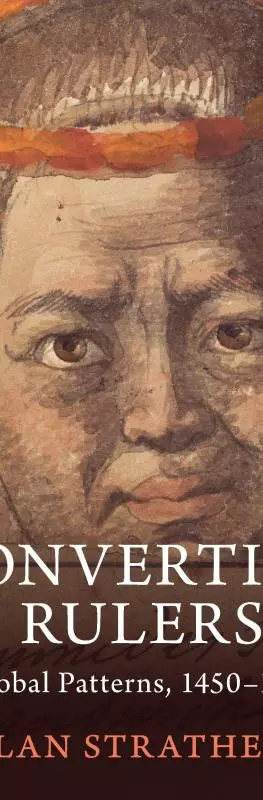
Converting Rulers: Global Patterns, 1450–1850
Why did so many rulers throughout history risk converting to a new religion brought by outsiders? In his award-winning Unearthly Powers (2019), Alan Strathern set out a theoretical framework for understanding the relation between religion and political authority based on a distinction between two kinds of religion - immanentism and transcendentalism - and the different ways they made monarchy sacred. This ambitious and innovative companion volume tests and substantiates this approach using case studies from Kongo, Japan, Ayutthaya (Thailand) and Hawaii.
DPhil Students
I would like to hear from potential DPhil students regarding: Early Modern Asian history; History of Sri Lanka; Global comparative early modern history
In the Media
- July 2019 - 'Sri Lanka, Behind the News: Sri Lanka’s clash of faiths’ - BBC History Magazine, pp. 10-13.
- 5 March 2019 - Alan Strathern on Religion and Political Authority in the Pre-Modern World - The Global History Podcast
- 4 October 2017 - The Last Sacred Kings - Aeon magazine
- 8 Sept 2015 - ‘Islamist Violence and the Role of Ideology’ - A Fair Observer
- 2 May 2013 - Why are Buddhist monks attacking Muslims?' - BBC News Magazine
- 1 November 2007 - ‘Diary: A Report on Sri Lanka’ - London Review of Books, Vol. 29, No. 21