Professor Adam Smith
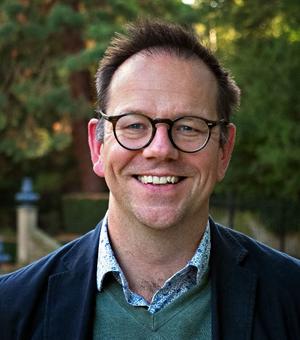
Edward Orsborn Professor of US Politics & Political History
Director of the Rothermere American Institute
+44 (0)1865 (2)82731
I am the Edward Orsborn Professor of US Politics & Political History and the Director of the Rothermere American Institute. I was born in the Northeast of England and went to Durham Johnston Comprehensive School and then to Oxford, Sheffield, Harvard and Cambridge universities. I taught for sixteen years at UCL before taking up my current position at Oxford.
My specialism is the American Civil War, its causes and consequences, but more broadly I am interested in democratic politics in various settings.
I regularly present documentaries on BBC Radio and write for various magazines and websites. (You can read some recent articles here.) I also a close interest in school history teaching, having previously worked on education policy for the Royal Historical Society, and having previously taught an undergraduate course in which students created and delivered a sequence of lessons to Key Stage 3 pupils.
Research Interests
- American Civil War
- Slavery in the United States
- Parties and Elections in US history
My principal area of research explores the relationship between ideas and political behaviour. My aim in recent books and articles has been to offer an analysis of political change grounded in how ‘ordinary’ people in the nineteenth century experienced and understood their world. My first book, No Party Now (Oxford University Press, 2006), analysed the tensions between wartime pressure for conformity and the practice of electoral politics. In 2017, the University of North Carolina Press published The Stormy Present: Conservatism and the Problem of Slavery in Northern Politics, 1846-1865, (2017). This book won the Jefferson Davis Prize, awarded by the American Civil War museum in Richmond for the best book on the Civil War era, and was a finalist for the Lincoln prize for the best book on Lincoln or the Civil War soldier, awarded by Gettysburg College and the Gilder Lehrman Institute for American History. It offers a new view of the northern path to war, focusing on the mass of northern voters who self-defined as ‘conservatives’ and whose shifting responses to the unfolding political crises shaped events more than is usually appreciated.
Another strand of my research focuses on the study of the image of the United States around the world. On this theme my most recent publication is an article about the ‘cult’ of Abraham Lincoln in interwar Britain, which appeared in the journal Twentieth Century British History. I am currently completing a book for OUP on the battle of Gettysburg in history and memory which, among other things, situates the meanings of that great battle in a transnational context. I also have academic interests in the history of theatre and in transatlantic liberalism and conservatism in the nineteenth century.
Publications
Gettysburg
How did Gettysburg become the most famous battle of the American Civil War and one of the most consequential in world history? Why is the most visited battlefield, the place where veterans came in the greatest numbers, where Presidents pay homage, and millions of families have vacationed? What was it about this three-day struggle in July 1863 in the rolling hills of Pennsylvania that made it seem the "turning point of the war", or the "high-water mark" of the Confederate rebellion?
DPhil Students
I have supervised 9 PhD/DPhil students working on nineteenth-century US history, on topics including the role of music in election campaigns, the Young America movement and the ‘environmental imagination’. I currently supervise Andrew Short who is completing his dissertation on Presbyterian missionaries in the American West. I would be happy to hear from any potential DPhil student who wishes to work on nineteenth-century US history.
I am also available to supervise Masters dissertations on nineteenth-century US history.
In the Media
I have written and presented a number of radio documentaries. Highlights are here:
- First Broadcast August 13, 2017 - BBC Radio 3
- First Broadcast May 9, 2017 - America Goes to War - BBC Radio 4 (Featured on Pick of the Week on Sunday 14 May, 2017)
- Five episodes, first broadcast Monday-Friday 16th-20th January, 2017 - Trump: The Presidential Precedents - BBC Radio 4
- Five episodes, first broadcast Monday-Friday 17th-21st October, 2016 - The Robber Barons - BBC Radio 4
- First broadcast Tuesday 26 July, 2016 - The Battle for the US Constitution - BBC Radio 4
- First broadcast Sunday 22 February, 2015 - The Day of the Locust - BBC Radio 3
- First broadcast Tuesday 25 April, 2014 - How Do Children Learn History? - BBC Radio 4
- First broadcast Sunday 20 April 2011 - The American Civil War: Radio Trilogy - BBC Radio 3
I’ve also been a contributor to many other radio programmes, including In Our Time, The World At One, From Our Own Correspondent, Front Row, The Today Programme, Woman’s Hour, Making History, and Things We Forgot to Remember–all on Radio 4; and to Night Waves on Radio 3, and The History Hour on the BBC World Service. I was also interviewed for a BBC Radio 2 documentary on the music of the Civil War. I’ve contributed to various podcasts including The Spectator and History Extra.
My TV work includes a contribution to documentaries about the “lost ship” of the Mojave Desert and a blockade runner built on Clydeside that played an important role in the American Civil War. I’m the presenter of a forthcoming documentary for the BBC on Ronald Reagan’s last movie, The Killers. And I’ve made a short film for UCL about the Fourteenth Amendment to the US Constitution.
I have presented two TV documentaries:
- First Broadcast July 30, 2017 - Ronald Reagan’s Last Movie - BBC World News / BBC News Channel
- First Broadcast July 22, 2017 - From Out of Town - BBC World News / BBC News Channel