Dr Zbigniew Wojnowski
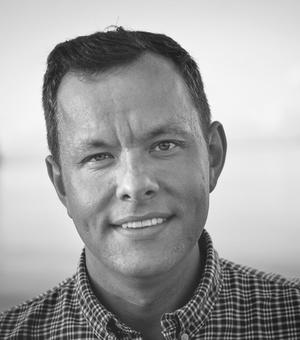
Associate Professor of Soviet History
St Antony's College
I am a historian of Ukraine, Russia, and Central Asia. I obtained my PhD from the School of Slavonic and East European Studies at UCL in 2011. Before joining Oxford in 2022, I spent several years working at Nazarbayev University in Astana and the University of Roehampton in London. My research has focused on interethnic relations and imperial dynamics in the USSR. My book entitled The Near Abroad: Socialist Eastern Europe and Soviet Patriotism in Ukraine examines how the flow of people and ideas across borders shaped Ukrainian and Soviet identities after the death of Stalin. I have also published on identity politics in Crimea, the role of popular culture in the Ukrainian national project, and the impact of de-Stalinisation in the USSR’s Central Asian peripheries. I am currently writing a book which examines the collapse of the USSR and the advent of capitalism in the post-Soviet region through the prism of show business.
Research Interests
My research has focused on interethnic relations and imperial dynamics in Soviet Ukraine and Kazakhstan. My book entitled The Near Abroad: Socialist Eastern Europe and Soviet Patriotism in Ukraine examines how the flow of people and ideas across borders shaped Ukrainian and Soviet identities after the death of Stalin. It pays particular attention to questions of political repression and violence, demonstrating that the Hungarian uprising, the Warsaw Pact invasion of Czechoslovakia, and the suppression of the Solidarity movement in Poland radically transformed notions of citizenship in the USSR’s western borderlands. Over the past few years, I have continued to publish on identity politics in Ukrainian Crimea, the role of popular culture in the Ukrainian national project, and the impact of de-Stalinisation in the USSR’s Central Asian peripheries. This work throws a unique light on the nature of socio-political unrest in the Soviet Union, public and cultural diplomacy in the Cold War, and the mental geographies that still shape international relations in Eastern Europe and Central Asia.
I am currently working on a monograph which extends the study of Soviet identity politics into the 1980s and the 1990s. As the lived experience of systemic transformation in the (former) socialist camp remains understudied, post-Soviet opinion leaders sustain a myth of the ‘wild 1990s’. To justify repressive measures at home and aggressive policies abroad, for example, Vladimir Putin claims that the dismantling of authoritarian controls produced economic hardship, social discord, and cultural stagnation. My history of show business challenges these politicised narratives by exploring how producers and consumers of popular culture engaged with market reform. Mining previously unexplored archival documents in Kazakhstan, Poland, Russia, Ukraine, and the United Kingdom, I analyse how economic reform transformed approaches to entrepreneurship, patterns of cultural consumption, and the limits of permissible expression in the late Soviet and early post-Soviet periods. The goal is to firmly integrate the USSR and its successor states within global histories of the ‘entrepreneurial self’.
My next research project will explore the relationship between political, economic, and health crises in Soviet and post-Soviet Kazakhstan of the 1980s and the 1990s. Preliminary research in Astana, and the five years I spent teaching Central Asian history in Kazakhstan, have inspired me to examine the history behind high cancer mortality rates in the country. My research will illuminate the experiences of marginalised, Kazakh-speaking communities in which Soviet power acquired a distinctly imperial colouring. The monograph based on this project will aim to identify local, national, and international obstacles to raising cancer awareness in Kazakhstan and beyond.
I would be keen to supervise research students working on any aspect of the history of interethnic relations and imperial dynamics in the USSR, the history of systemic transformation in the USSR and its successor states in the late twentieth century, Soviet relations with the socialist states of Eastern Europe, and the role of the USSR in the Cold War.
Publications
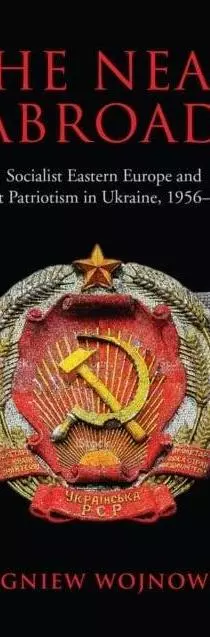
The Near Abroad: Socialist Eastern Europe and Soviet Patriotism in Ukraine, 1956-1985
From the Soviet perspective, Eastern European socialist countries formed the Soviet near abroad – more familiar and accessible than the capitalist West, yet also unambiguously foreign. Close links between Soviet and East European communist parties and trade across the Soviet border lent a great degree of uniformity to the Soviet bloc. At the same time, there were important barriers between the USSR and its Cold War allies. In contrast to domestic travel between Soviet republics, inhabitants of the USSR needed to obtain a foreign passport to visit the satellite states.
DPhil Students
I would be keen to supervise research students working on any aspect of the history of interethnic relations and imperial dynamics in the USSR, systemic transformation in the USSR and its successor states in the late twentieth century, Soviet relations with the socialist states of Eastern Europe, and the role of the USSR in the Cold War.
In the Media
- April 2022 - 'Moscow’s Divide and Rule’ - History Today 72:4