
Dr Perry Gauci

Tutor in Modern History
Lincoln College
At undergraduate level, I teach a wide range of courses, broadly within the period 1500-1800. I principally concentrate on political and social history, although I do cover economic and cultural topics as well. At Lincoln I currently teach our first-year undergraduates for Historiography (Machiavelli), British History 1685-1830, and the Theories of the State paper. For second and third years I also teach Disciplines of History; European History 1618-1799, and a number of specialist options, including the further subjects on eighteenth-century London, and on the Age of Jefferson. For several of these courses I give lectures or supervise classes at a university-wide level.
Research Interests
My research interests broadly rest with the political and social development of the English state from 1650 to 1750. Having studied the English civil war as an undergraduate, I was interested to see how the state managed to overcome the bitter factionalism of the 1640s and 1650s, at both a national and local level. My doctoral thesis concentrated on a leading provincial town, and allowed me to explore the relationship between politics at the centre and at the periphery. My work suggested that "national" historians have perhaps underestimated the impact which local and regional circumstances could have on political developments in this period, and that the very notion of "politics" needs to be expanded to encompass the significance of social and economic factors in determining allegance. In order to probe these issues further I undertook a study of the English merchant from 1660-1720, so that I could measure the responsiveness of the English state to contemporary commercial and political change. I then pursued these themes by focusing on the City of London and have since widened my interests to incorporate Britain's imperial experience. Historians, led by Lincoln's Paul Langford, have viewed Georgian Britain as a "polite and commercial people", and I hope that my research will help us understand how that came about.
Publications
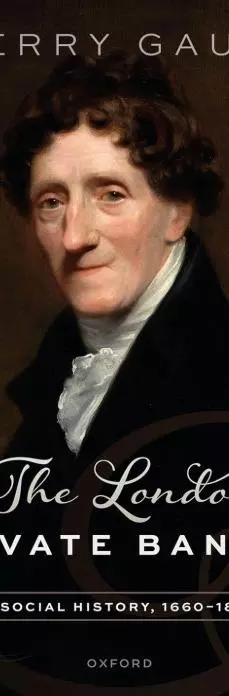
The London Private Banker: A Social History, 1660–1825
This book examines the societal impact of the London private bankers between 1660 and 1825. Economic historians have clarified their commercial development, but their distinctive role as retail bankers offers insight into an array of dynamic social forces in eighteenth-century Britain, especially the relationship between the middling and upper orders. Using a sample of some 300 partners, this study examines the development of London private banking from its uncertain late Stuart origins to its established place on the late Georgian high street. Their experiences illuminate the solidity and adaptability of the social order, and their importance will be tracked through their commercial services, public lives, and private pleasures.
DPhil Students
I would like to hear from potential DPhil students regarding any fields related to me research or any potential Masters students looking at Eighteenth Century Atlantic World and British History.