
Dr Mori Reithmayr
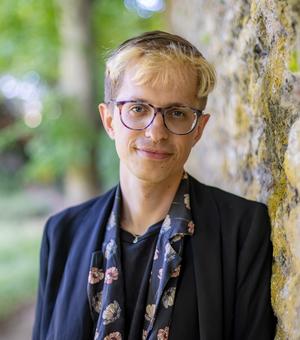
Teaching Fellow in Gender and Queer History
Research Interests
- 20th Century US History
- Queer History
- Intellectual History
My book project Ideas for Power: The Invention of Gay Community, 1953-1969 presents the first detailed study of the early history of ideas of ‘gay community’ in North America. Contrary to widely held beliefs, the notion did not emerge naturally or inevitably from an expanding mid-century gay culture. ‘Gay community’ had to be invented – theorized, defended, disseminated, and actively summoned into being. Ideas for Power uses a diverse archive of drag performances, photographs, oral histories, legal documents, gay bar rags, newsletters, and other sources to reconstruct this process. It follows it across three distinct phases: origins; coinage and early pluralism; consolidation and continental dissemination. At each step, the project recovers the debates the so-called ‘homophile’ activists of the 1950s and 1960s – lesbians, gay men, street youth, and their allies – held over the nature, membership, and scope of ‘community,’ sets them within the context of their wider political projects, and shows how homophile notions of community were always ‘ideas for power’: concepts purposefully carved and wielded to achieve collective power.
Ideas for Power builds on my doctoral thesis ‘Community Before Liberation: Theorizing Gay Resistance in San Francisco’ (defended in April 2023 at New College, Oxford, no corrections), which received Honorable Mentions for dissertation prizes from the Organization of American Historians and the American Political Science Association.
Publications
The Invention of Gay Community in San Francisco, 1960–1970
Though historians have often traced the evolution of LGBT ‘communities’ in the United States, they have left the genealogy of queer ideas of ‘community’ underexamined. This article begins to address this lacuna by charting the bifurcated early history of these ideas in the nation’s ‘gay capital’, San Francisco. It identifies homophile activist José Sarria’s 1961 campaign for San Francisco city supervisor as the event that introduced the notion of a ‘gay community’ to lasting effect into local homophile organizing. Sarria’s camp mobilized the idea as a resistance tool for the fight against state repression. In the following years, the concept established itself across local homophile activism. Simultaneously with the rise of ‘gay community’, some homophile leaders also developed coalitional visions of ‘community’. These were inspired by Black freedom organizing and prioritized building community with other marginalized groups. Only a mid-1960s struggle over the orientation of the country’s first homophile community centre led to a lasting sidelining of this coalitional tradition. The reconstruction of this bipartite history challenges enduring myths of a monolithically conservative homophile movement, and helps explain the subsequent success of a homonormative gay politics in the late 1960s and 1970s.