Dr Matthew Grimley

Associate Professor of Modern History
Merton College
Research Interests
- Religion and social reconstruction in Britain, 1939-1951
- Changing ideas of the state in modern Britain
- Twentieth-century British and English national identity
My research is on the intersection between politics, religion and intellectual life in 20th century Britain. I began by looking at the inter-war period in my monograph, Citizenship, Community and the Church of England, but have more recently worked on the post-war period, producing a series of articles on race relations, nuclear weapons, the permissive reforms of the 1960s, and anti-permissiveness and Thatcherism. I am now working on a book on religion and social reconstruction in Britain during and after the Second World War. In all my work to date, I have explored the ways in which, in spite of declining religious observance, religious perspectives continued to inform debates about political and social questions in twentieth-century Britain.
Publications
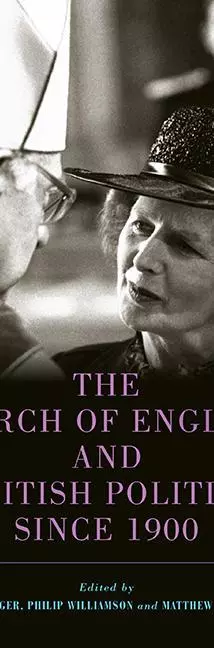
The Church of England and British Politics since 1900
Edited by Tom Rodger, Philip Williamson, Matthew Grimley
Bringing together researchers in modern British religious, political, intellectual and social history, this volume considers the persistence of the Church’s public significance, despite its falling membership.
During the twentieth century, the relationship between the Church of England and the British state was transformed. The character and dynamics of the connections shifted as politics became more democratic and society more secular,as the role of the Crown and parliament in Church government was curtailed, and as the Christian foundations of secular law were weakened. Bringing together researchers in modern British religious, political, intellectual and social history, this volume considers the persistence of the Church’s public significance, despite its falling membership.
During the twentieth century, the relationship between the Church of England and the British state was transformed. The character and dynamics of the connections shifted as politics became more democratic and society more secular,as the role of the Crown and parliament in Church government was curtailed, and as the Christian foundations of secular law were weakened.
DPhil Students
I would like to hear from potential DPhil students regarding: c20 British political, religious and intellectual history