Dr Luke Blaxill
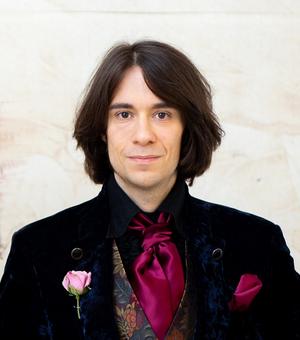
Stipendiary Lecturer in Modern British History
Hertford College
I specialise in:
- British Politics of all kinds from 1750 on
- Elections
- The British Monarchy
- The Conservative, Liberal, and Labour Parties
- Political Language and Communication
- Prime Ministers
- Digital Humanities, esp. Text Mining/ big data methods
- Women in Politics, 1945-present
I am also the lead author and director of the Alternative Guide to Postgraduate Funding, which has sold over one million copies and licences and is used by the majority of UK Universities.
Research Interests
I am particularly interested in British Politics (with a capital 'P'): elections, political parties, Parliament, ideology, political issues, communication and presentation, and constitution and cabinet. I am also interested in the local and national dimensions of politics, and centralisation. My primary period of interest is mid-late Victorian and Edwardian Britain, although I increasingly work on the Twentieth and even Twenty-First centuries. My most recent work on politics has primary been about Victorian electoral violence, and I am involved in an AHRC/ESRC grant funded project on the subject.
I am also extremely interested in Digital History, and much of my research to date has focused on a key methodological question. Namely, how historians can analyse huge multi-million word texts which are physically impossible to read in totality, for example general election campaigns in the late Victorian and Edwardian period, where an estimated billion words of platform speeches were delivered nationwide per campaign. My book, the War of Words, explores how quantitative and qualitative text mining techniques originating from Corpus Linguistics can help meet this challenge. As such, it is the first book length study in History that attempts to apply text mining to established historical debates with the aim or proving the utility of this method. I demonstrate how the systematic computerised analysis of millions of words of text can lead to new insights and major revisions to historians' current understanding of British political language, which has thus far been based exclusively on manual reading and focused case studies. I use text mining in the majority of my published outputs, many of which are collaborations with Computer Scientists and Political Scientists.
I am also very interested in historical psephology in the style of classic Nuffield studies- something nowadays largely left to the political scientists. Two pieces - both published in the Historical Journal - use electoral data to reassess the structural basis of Conservative support in the 1880-1910 period, and the fall of the Liberal party after the Great War.
I am also interested in the role of women in modern British politics, and how they altered the substance of parliamentary debate. Finally, I am also working on the using text mining London's Pulse corpus of London Medical Officer of Health reports from 1848-1972.
Publications
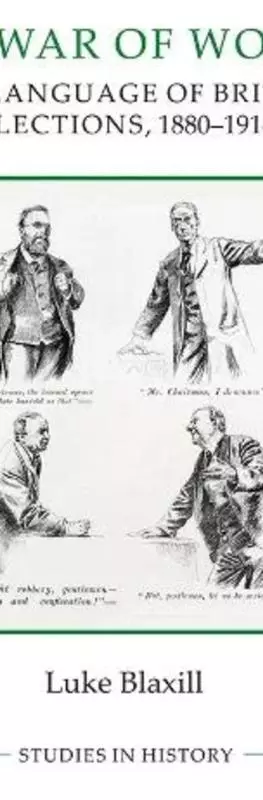
The War of Words: the Language of British Elections, 1880-1914
The late nineteenth and early twentieth century have been widely eulogised as a "golden age" of popular platform oratory. This book considers the language of British elections - especially stump speeches - during this period. It employs a "big data" methodology inspired by computational linguistics, using text-mining to analyse over five million words delivered by Conservative, Liberal and Labour candidates in the nine elections that took place in this period.
In the Media
- 25 October 2022 - Guest Historian, The Long View with Jonathan Freedland: Short Lived Leaders - BBC Radio 4
- 15 October 2022 - Talk TV interview with Kevin O'Sullivan on Princes in the Tower - YouTube
- 18 September 2022 - Talk TV Interview with Kevin O'Sullivan on the Queen - YouTube
- 14 September 2022 - TalkTV Interview with Julia Hartley-Brewer on the Queen - YouTube
- 1 July 2022 - Princess Diana: Who do you think she was? - TV documentary, 3DD Productions
- 8 June 2021 - Guest Historian, The Long View with Jonathan Freedland: The Roaring Twenties - BBC Radio 4
- 21 February 2021 - Dozd TV Rain Russian News Interview with Ekaterina Kotrikadze: Princess Diana and Martin Bashir - YouTube
- 2 November 2020 - Heavy History British Election Series - YouTube
- 31 January 2020 - Channel 5 News 2019 Election Analysis Interview - YouTube
- 11 December 2019 - Channel 5 News Pre Election Analysis - YouTube
- 8 January 2019 - Guest Historian, The Long View with Jonathan Freedland: Prime Ministers and Divided Parties - BBC Radio 4
- 21 November 2017 - Guest Historian, The Long View with Jonathan Freedland: Weakened Prime Ministers - BBC Radio 4
- 17 August 2017 - Documentary: 'A Tale of Two Sisters' (Princess Margaret and Queen Elizabeth) - UK TV Play