

Dr Helen Gittos

Fellow and Tutor in Medieval History
Balliol College and Brasenose College
Research Interests
- Medieval cultural and social history
- Church History
- History of Written Languages
- Medieval liturgy
I am interested in how the past challenges our preconceptions and helps us to imagine how differently the world can be experienced and understood.
Current projects include a book on the use of English in the liturgy before the Reformation, spanning the period from c. 700-c.1550AD.
Alongside this, I am working on aspects of British history in the sixth and seventh centuries, particularly drawing on archaeological sources.
I have long been interested in places and the evidence for past people in the landscape. In connection with this, I am leading a collaborative research project on Cerne Abbas, Dorset with Hugh Willmott and Michael Shapland.
Much of my work has been on the history of the church and its rituals in the Middle Ages, especially using liturgical sources as a rich vein of evidence for many aspects of the social, cultural and religious history of the early Middle Ages. My first book was Liturgy, Architecture and Sacred Places in Anglo-Saxon England ; I have also co-edited two collections of essays on the topic: The Liturgy of the Late Anglo-Saxon Church (2005) and Understanding Medieval Liturgy (2015).
A second strand of my research is about language. I’ve written about the use of Old English in liturgical contexts and also on the audience for Old English texts.
I enjoy working collaboratively and learnt a great deal from an AHRC International Research Network that I led with Sarah Hamilton, from which came Understanding Medieval Liturgy (2016). I am one of the co-investigators on Worked in Stone, an AHRC-funded project to complete the Corpus of Anglo-Saxon Stone Sculpture, an Advisory Editor for Cambridge Studies in Medieval Life and Thought, a council member of the Henry Bradshaw Society, and on the advisory board for Fontes Anglo-Saxonici. I am also Director of the Oxford Centre for Early Medieval Britain and Ireland and a convenor of the Institute of Historical Research seminar on the History of Liturgy.
Publications
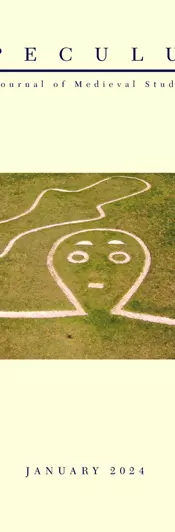
The Cerne Giant in its Early Medieval Context
T. Morcom & H. Gittos
The recent dating of the Cerne Abbas Giant came as a surprise. This huge, naked figure was cut into a Dorset hillside not, as many have supposed, in prehistory, nor in the early modern period, but in the early Middle Ages. This means that for the first time it is possible to place the Cerne Giant within a cultural context. In this article, we propose an explanation for when and why he was originally cut as an image of Hercules.
DPhil Students
I welcome applications from DPhil and Masters students wanting to work on any relevant research topics.
Recent DPhil Students
Megan Bunce, Shrines and special graves in Britain and Ireland c.600-850
Geoff Sedlezky, The Significance of Doorway Positions In English Medieval Parochial Churches and Chapels
Ciaran Arthur , The Liturgy of “Charms” in Anglo-Saxon England
Recent Masters Students
Alex Still, ‘Hroðgar’s Horse: The Evidence for an Interconnected Elite Across the North Sea’
Darcy Holland, ‘Women and Writing in Eastern England c. 450-800’
Robert Klapper, ‘The Prittlewell Princely Burial, the Liudhard Medalet, and the Anglo-Saxon Iron ‘Lamps’
In the Media
- 08 November 2025 - Cerne Abbas: Secrets of the Giant - Time Team
- 30 August 2025 - Why we should be better about talking about death, with Dr Helen Gittos - History Extra Life Lessons
- 21 January 2025 - From Sutton Hoo to Byzantium: Did Anglo-Saxons fight for the Empire? - Time Team
- 11 January 2025 - Historian offers new theory for Sutton Hoo graves - BBC News
- 2 January 2025 - Who is buried at Sutton Hoo? - History Extra Podcast
- 09 January 2024 - The Rough Corner: The Chalk Giant Mystery… Solved! - We Can Be Weirdos
- 8 January 2024 - Sutton Hoo burials may have been soldiers in Byzantine army - The Times
- 1 January 2024 - Cerne Abbas Giant: Has the mystery of the chalk hill figure been solved? - BBC News
- 1 January 2024 - The Cerne Giant in its Early Medieval Context - The Multicultural Middle Ages Podcast
- 31 May 2021 - The curious tale of an Anglo-Saxon giant - History Extra Podcast