

Dr Grant Tapsell

Fellow and Tutor in History, Lady Margaret Hall; Associate Professor of History
Lady Margaret Hall
I am an historian of early modern Britain and Ireland, focusing on seventeenth-century politics and religion.
Research Interests
My initial interests were focused on early Whig and Tory 'party' politics in the reign of Charles II. This included attention to partisan writing, religious differences, and the extent to which partisanship could be seen in Scotland and Ireland as well as England. Many of these concerns were then examined over the whole later Stuart period in a jointly-authored book with Dr George Southcombe which was primarily written with undergraduate students in mind.
Collaboration has remained an important part of my research life, including two jointly edited festschriften for former tutors, and a collection of essays on the later Stuart church. The last of those reflected my increasing concern with the history of the Church of England in the seventeenth century. This has focused on aspects of the career of William Sancroft, Archbishop of Canterbury from 1678-90, culminating in a book-length edition of his letters from his time as a Cambridge undergraduate in the 1630s right through to his death in 1693.
In 2021 I gave the Church of England Record Society Annual Lecture about Sancroft, which can be viewed here: https://www.youtube.com/watch?v=vd7mau8otcs
Publications
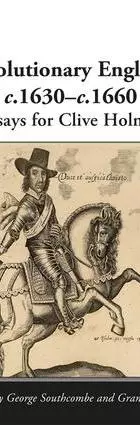
Revolutionary England, c.1630-c.1660: Essays for Clive Holmes
ed. with George Southcombe
Revolutionary England is a perennially vibrant field of study. The roll-call of events, crises, and changes that electrified mid-seventeenth-century England certainly retains an impressive cumulative force. The descent into civil war, killing of a king, creation of a republic, fits of military government, written constitutions, dominance of Oliver Cromwell, abolition of a state church, eruption into major European conflicts, conquest of Scotland and Ireland, and efflorescence of powerfully articulated political thinking dazzled, bewildered, or appalled contemporaries.
DPhil Students
I have supervised ten DPhils to date, four of which have been published with major presses, and two more in production. I am keen to work with students looking to focus on Stuart politics and religion, especially after c.1640.