
Dr George Roberts
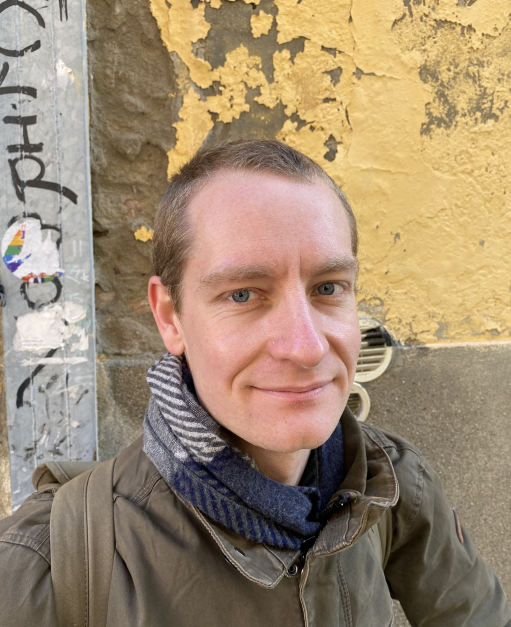
Koch History Centre Fellow
Wadham College
george.roberts@history.ox.ac.uk
I’m a historian of twentieth-century Eastern Africa, particularly Kenya, Tanzania, and Comoros. I’m particularly interested in the politics of anticolonial liberation, post-colonial state-making, the region’s print media, and the global history of shipping. Since 2022, I have been a Lecturer in Modern History at the University of Sheffield. In 2026-27, I am a Fellow at the Koch History Centre, where I will be working on a book project on the remaking of Kenya’s political economy between the 1970s and 1990s.
Research Interests
My first book, Revolutionary State-Making in Dar es Salaam: African Liberation and the Cold War, 1961-1975, was published by Cambridge University Press in 2021, with an Africa-region edition published by Mkuki na Nyota in Tanzania. It explores how the vibrant political scene of Tanzania’s capital shaped the struggles of exiled Third World liberation movements as they fashioned a new global order after empire. At the same time, the book argues that these dynamics created powerful enemies for Tanzania’s own socialist revolution, which took a sharp authoritarian turn. The book thereby examines the paradoxical relationship between radical internationalism and authoritarian state-making in post-colonial Africa.
I continue to work on the history of African revolutionary movements through a study of the decolonisation of the Comoros archipelago from the perspective of diaspora communities around East Africa’s Indian Ocean basin. Research emerging from this project has been published in the Journal of African History.
The disintegration of these Third World solidarities amid the oil crises of the 1970s provides the moment of departure for my current major project. This new history of Kenya’s late twentieth century political economy takes its tentative title, Revisiting the Lost Decades, from the epithet given to Africa’s 1980s and 1990s – a period typically characterised by the enforcement of neoliberal reforms on the continent’s indebted states by the IMF and World Bank. Instead, this project analyses the experimental and innovative attempts by Kenyans, ranging from boardroom elites to market traders, to harness the forces of globalisation and financialisation to remake the country’s economy in a time of scarcity and develop new methods of capital accumulation.
I am pursuing a separate project on the global contemporary history of shipping. Supported by the British Academy and Leverhulme Trust, this collaboration with Dr Elizabeth Banks (Edinburgh) questions Western-led narratives of globalisation by exploring how socialist and post-colonial states sought to build alternative orders of maritime trade in the twentieth century.
Finally, I am interested in the relationship between decolonisation and the media, particularly around the political economy of the print media. I have written about Swahili newspapers in Tanzania and the global history of newsprint. I am currently co-editing, with Zamda Geuza (Exeter) and Emma Hunter (Edinburgh), a book on newspapers and publishing in Tanzania since independence.

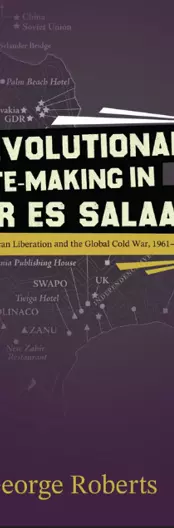
Revolutionary State-Making in Dar es Salaam
Cambridge University Press in 2021/Mkuki na Nyota in 2025
My book explores how the vibrant political scene of Tanzania’s capital shaped the struggles of exiled Third World liberation movements as they fashioned a new global order after empire. At the same time, the book argues that these dynamics created powerful enemies for Tanzania’s own socialist revolution, which took a sharp authoritarian turn. The book thereby examines the paradoxical relationship between radical internationalism and authoritarian state-making in post-colonial Africa.