Dr Conor O'Brien
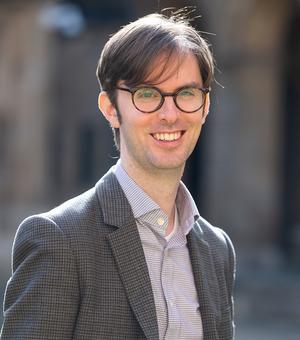
Associate Professor in the Early Medieval History of the British Isles and North Atlantic World
The Queen's College
Research Interests
I am primarily a historian of ideas and beliefs, interested in how ‘religion’ (a controversial term for the Middle Ages) helps us understand early medieval history and how the early Middle Ages help us understand the history of religion.
I have just completed my second monograph, The Rise of Christian Kingship in the Early Medieval West (OUP). Taking a comparative approach that is sensitive to regional variation and the interconnected nature of the post-imperial Latin West, the book traces the slow, complex, and only ever partial way in which the concept of "Christian kingship" arose in the Latin West over the five centuries up to 840. It is the major output of a wider project that explored the possibility of a religion/secular distinction in the early Middle Ages, something about which I have published in Past & Present.
My exploration of the interweaving of politics and religion in the early Middle Ages has raised, for me at least, interesting questions about the possible relationship of this theme with environmental history. I hope to explore the early medieval "politics of nature" in the near future.
A separate strand in my research investigates issues of community and identity in the early medieval world, particularly the importance of the idea of the Church. Previously, my publications have focused on the interplay of religious and ethnic identities, but I am currently exploring the importance of group identity in the Insular Easter Controversy.
Since much of my teaching continues to focus on early medieval Britain and Ireland, I have begun to plan an introduction to the Insular world between the Romans and the vikings.
Publications
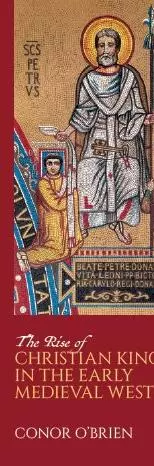
The Rise of Christian Kingship in the Early Medieval West
Over the course of the early Middle Ages, Christianity changed politics and politics changed Christianity. Christianity emerged in the pagan Roman Empire and early Christians, consequently, developed a 'secular' understanding of politics, where the religious identity of their ruler was irrelevant; by the time the synthesis of early medieval Christianity was achieved in the ninth-century Carolingian Empire, however, a new model of 'Christian kingship' had emerged, linking the legitimacy of a ruler to the quality of their Christianity.
DPhil Students
I am interested in hearing from any students interested in research work on early medieval Europe, especially in the areas of my particular specialisms: religion and pre-viking Insular history.