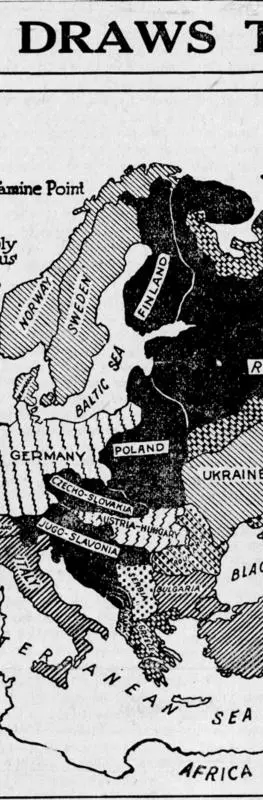
Hunger Draws the Map: Blockade and Food Shortages in Europe, 1914-1922
This three year collaborative project brings together specialists working on different countries affected by the First World War to examine the impact of food shortages on European societies during the conflict. It will consider both the causes and the consequences of reduced food supplies in various regions of the continent. Our goal is to compare levels of hunger and responses to it during and immediately after the war across the continent. Local studies on hunger during the war exist but a truly transnational project will provide a much more global picture of the phenomenon.
Major economic strain occurred in the countries involved with the First World War - not least due to shifts in trading partners and patterns, the British Blockade, and extensive physical destruction. As the War continued, many people across Europe, and even parts of the Middle East and Asia, struggled to survive with a reduced food supply. State rationing programmes were eventually introduced in all the major belligerent countries other than the United States. Severe malnutrition and near famine in regions of Europe were reported as negatively affecting both soldiers and civilians during the conflict. But were these stoppages enough to constitute real hunger and famine, or were the effects of blockade and other disruption to the normal food supply minimal and manageable by the various populations? How far did political expediency match civilian deprivation?
This research project will examine various responses to hunger within Allied, Central, and neutral countries from 1914 to 1922. Further, the project will use surveys, reports, and other records to assess actual levels of hunger and famine in these disparate nations. Finally, and uniquely, this research project will make meaningful comparisons of hunger levels, and the responses of governments and civil societies, between these various countries. Our network gathers specialists of occupied territories (Belgium), neutral countries (the Netherlands), the Central Powers (Germany and Austria-Hungary) and new states emerging after the war (Poland, Czechoslovakia, Latvia) who work with disparate sets of historical sources to analyse the consequences of hunger.