Early-Career Workshop with Professor Kapil Raj
3 December 2026, 17:00–18:30
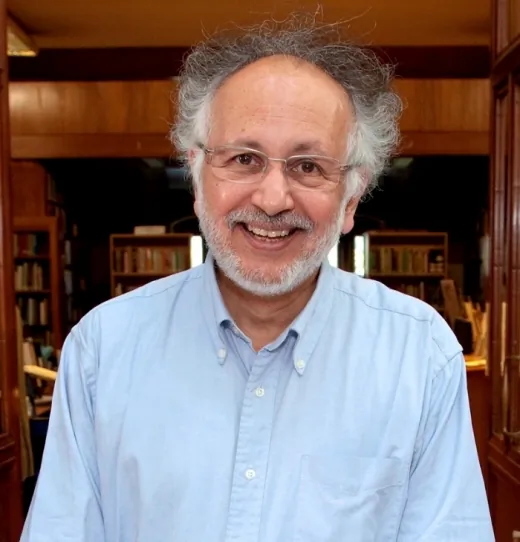
Professor Emeritus Kapil Raj
Venue: Room 20.402, Faculty of History, Schwarzman Centre for the Humanities
Registration: Available places are limited. Please register in advance here.
Summary
This workshop will offer early career researchers an opportunity to engage in an informal discussion of Professor Kapil Raj’s recent article on mesmerism and surgery in nineteenth-century Calcutta, which will be circulated in advance. Following a brief introduction, Kapil Raj will offer reflections on the article for approximately ten minutes before opening the discussion to all participants. The session aims to foster an open and collegial exchange, encouraging graduate students and early career scholars to share their own research, perspectives, and methodological approaches.
Preparatory readings:
Kapil Raj, “When Scottish Medicine Hospitalized Indian Magic: Dr James Esdaile’s Mesmeric Surgery in Mid-Nineteenth-Century Bengal,” The British Journal for the History of Science 57, no. 3 (2024): 325–47, https://doi.org/10.1017/S000708742400116X.
(Optional) Kapil Raj, “Networks of Knowledge, or Spaces of Circulation? The Birth of British Cartography in Colonial South Asia in the Late Eighteenth Century,” Global Intellectual History 2, no. 1 (2017): 49–66, https://doi.org/10.1080/23801883.2017.133288
Chaired by Euan Huey (euan.huey@rhul.ac.uk) and co-organised by Giuseppe Marcocci (giuseppe.marcocci@history.ox.ac.uk), Mrinalini Sisodia Wadhwa (mrinalini.wadhwa@all-souls.ox.ac.uk), and Toma-Jin Morikawa-Fouquet (tomajin.morikawa@history.ox.ac.uk)
About the speaker:
Kapil Raj is Professor Emeritus of the History of Science at the École des Hautes Études en Sciences Sociales in Paris.
Coming from a scientific academic background, Raj has widely explored the fields of epistemology and history of science to discuss the question of the transmission of scientific ideas between different cultures.
He has published extensively on the history of natural history, social statistics, and geography in the context of the European encounter with South Asia from the 16th century to today. In his writings, he stresses the role of cultural circulations and interactions in the formation and transformation of scientific knowledge. Raj’s research contributes to debates about eurocentrism in the history of colonialism and postcolonialism. In his groundbreaking book, Relocating Modern Science: Circulation and the Construction of Knowledge in South Asia and Europe, 1650-1900 (2007), he suggests to study circulation as a central concept in the historical analysis of the construction of naturalistic, geographical, linguistic, and social ideas. Through a detailed analysis of key moments in the history of science, it demonstrates the crucial roles of circulation and intercultural encounter for their emergence. This study challenges the belief that modern science was created uniquely in the West and was subsequently diffused elsewhere. Such a global perspective enables Raj to demonstrate the polycentric nature of the emergence of knowledge and encourage the study of relational histories.
Info: please contact Giuseppe Marcocci (giuseppe.marcocci@history.ox.ac.uk)