SEED: Specimens and Empire
Educational Discovery in the Du Bois Herbarium
28 October 2026
An exciting new interdisciplinary research project from the Oxford History Faculty, in collaboration with the Department of Biology and Gardens, Libraries, and Museums Division.
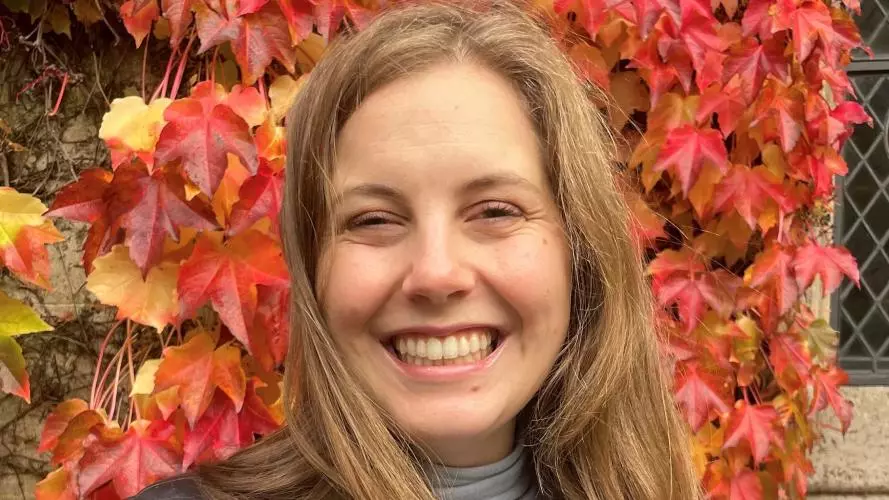
Dr Madeline White will lead a new research project, funded by the AHRC Catalyst Award scheme, that uses the University of Oxford’s Du Bois Herbarium to advance research and education on the importance of plants in Britain’s past, present, and future.
Herbaria, collections of dried plants, have been at the forefront of scientific research and education since the sixteenth century. More recently, herbaria have become the frontier of novel research in evolution, biodiversity, and climate change. SEED foregrounds the Du Bois Herbarium for a new research aim: to demonstrate how these collections can be valuable sources of colonial history that foreground the role of indigenous actors and their knowledge in histories of science and botanic gardens.
Working with Dr Lauren Daly, secondary education officer of the Oxford Botanic Garden and Arboretum, chair of the Botanic Gardens Education Network, SEED will also advance schools outreach at botanic gardens throughout the UK and translate the value of historic herbaria to modern audiences of scientists, educators, and students.
OBGA will provide the testing ground for new educational materials developed in collaboration with heritage partners at Historic Royal Palaces and Royal Botanic Garden Edinburgh. A project advisory board, including senior historians, scientists, museum curators, and education experts across the UK, as well as source communities in St Helena and Chennai, India, will ensure the research has wider impact and reach in the heritage sector and across disciplines.
Professor Olwen Grace, Deputy Director of Science (Collections) and Curator of the Herbarium at the Royal Botanic Garden Edinburgh, said: ‘This is such a significant project, with massive potential for key organisations to work in partnership and make a real difference in the understanding and sharing knowledge of our collections. As an international botanic garden with more than three-and-a-half centuries’ practice in collecting and studying flora, we are committed to sharing our Herbarium assemblage of more than three million specimens, for improved understanding of natural history collections as records of cultural heritage, educational resources, and sources of crucial scientific data.’
The project will also work with Dr Jemima Hubberstey at Historic Royal Palaces, an expert in eighteenth century gardens. Dr Laura Tompkins, Research Lead at Historic Royal Palaces said: ‘Historic Royal Palaces is excited to partner on this project, which will further our understanding of the connections between the gardens at Hampton Court Palace and the royal consumption of botanical imports in the late seventeenth and early eighteenth century. At Historic Royal Palaces, one of our core research goals is to better understand the global connections to our collections, and we are pleased to support the project as it develops educational resources to engage secondary schools with the global history of plants.’
The project was supported by and developed with Dr Rachel Delman and Jennifer Pagliucia in the Divisional Heritage Partnerships team.
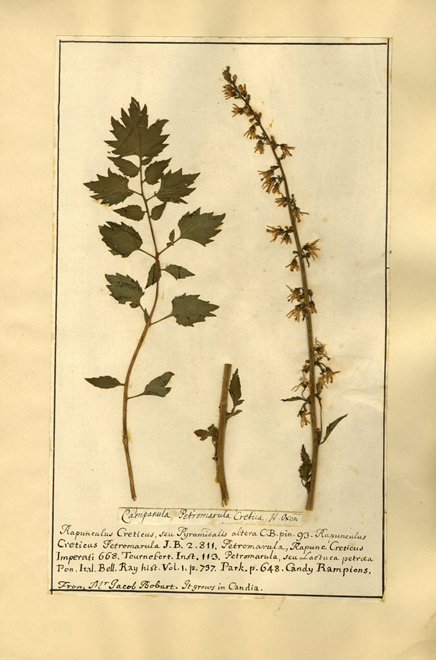
Rampion specimen grown in the Oxford Botanic Garden, now preserved in the Du Bois HerbariumBRAHMS Online, Department of Biology, University of Oxford. Campanula sp. (Campanulaceae) (DB-05856, 00108380K; OXF (Du Bois))
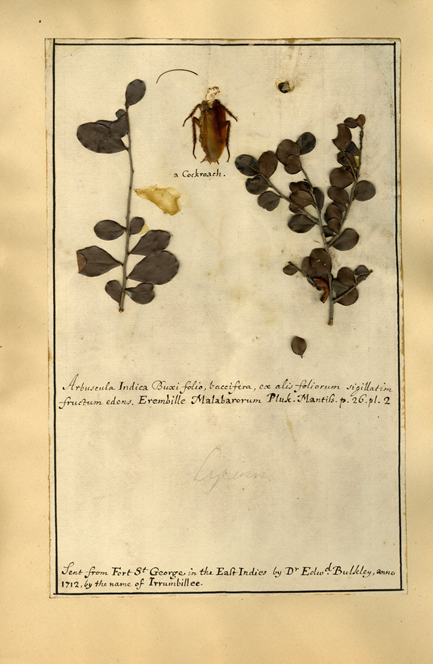
A box-thorn specimen from the Du Bois Herbarium collected in Fort St. George (Chennai), India, which also features a cockroachBRAHMS Online, Department of Biology, University of Oxford. Lycium sp. (Solanacae) (DB-11443, 00159982Y; OXF (Du Bois))
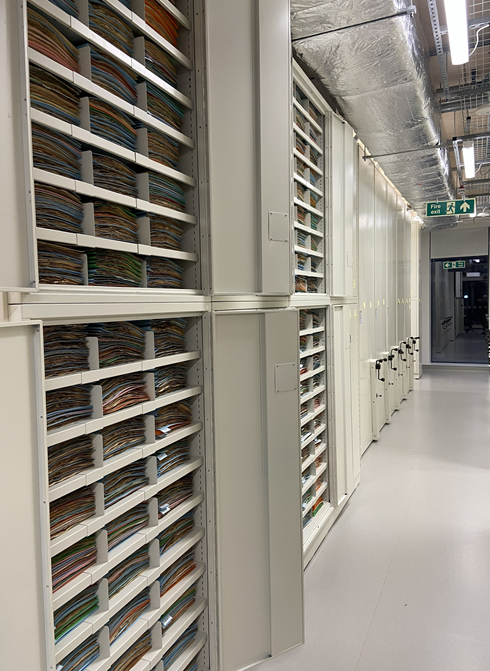
The Du Bois Herbarium in its new location inside the Life and Mind Building.Stephen Harris
What is the Catalyst Award scheme?
The AHRC Catalyst Award scheme supports early career academics accelerate their trajectory as independent researchers, to unlock their potential, build leadership and convenor experience. It particularly encourages scholars to combine research with public outreach and impact through partnership with
SEED is the first Catalyst Award success for the History Faculty at The University of Oxford.