Chris Wickham (1950-2026): A Portrait
19 October 2026 | Professor Alice Rio
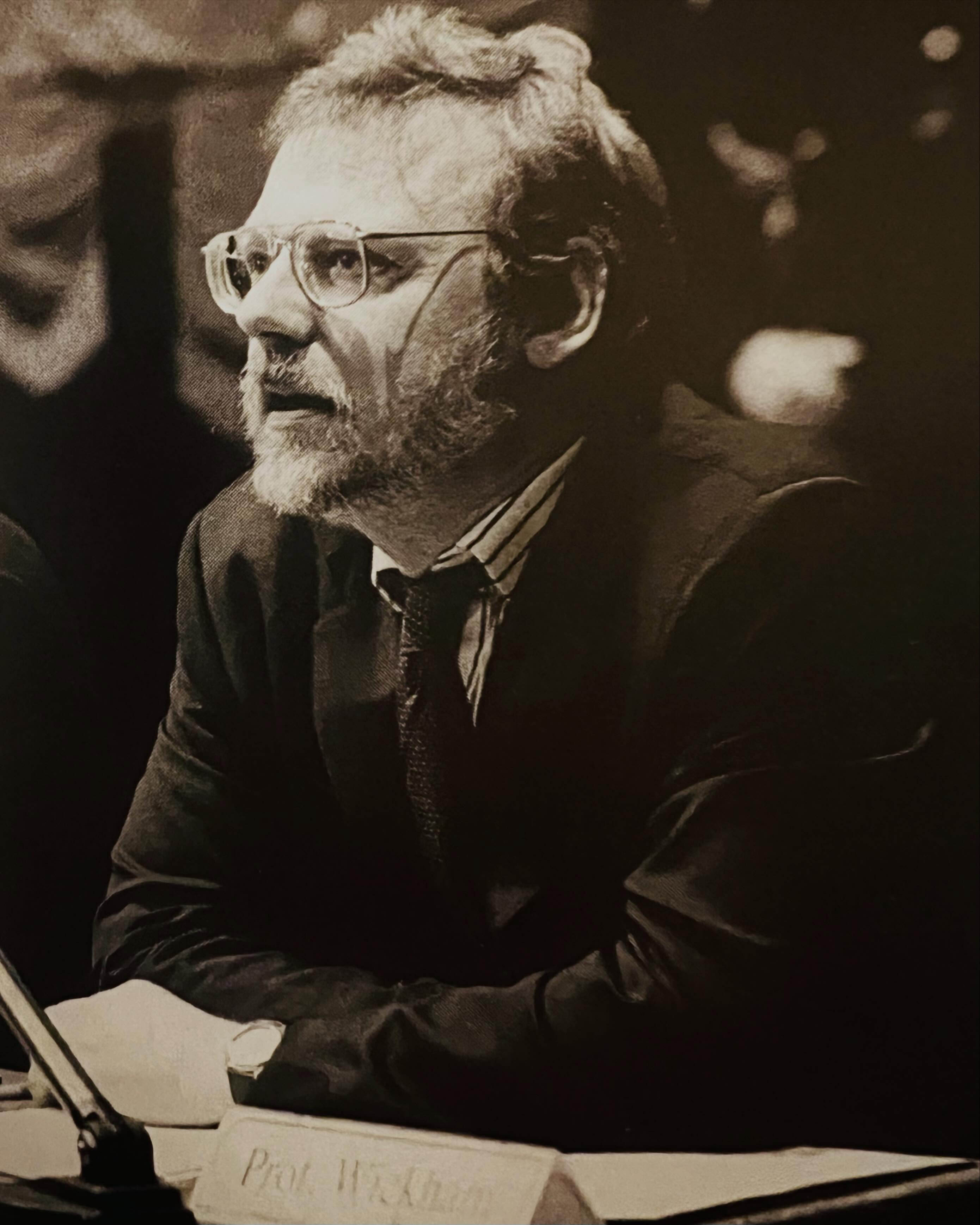
Chris Wickham’s work spanned an epic breadth of space and time. His major works are dazzling analyses of the medieval Mediterranean as well as of the Europe beyond it, from the fifth to the twelfth centuries, ranging from Egypt to Iceland. And yet for all the grand scale of some of his books, everything with him began with local ties and communities.
This was true of him both as a historian and as a human being. He was not only extraordinarily impressive as a scholar and an intellectual, but also exceptionally kind, and a lot of fun to be around. He was warmly supportive of peers, an inspiring colleague and a good friend; someone who knew the value and the joys of a single pleasant evening, of good food, good wine and good company – as well as, famously, the occasional episode of Buffy the Vampire Slayer, a mousemat of which adorned his giant desk at All Souls during the entirety of his tenure at Chichele Professor in Medieval History, between 2005 and 2016.
During his time at Oxford, and before that during the thirty years he spent at the University of Birmingham, he was a touchstone and perpetual source of encouragement and advice for doctoral students and early career researchers. If he took on such importance in the field of medieval history, it was partly because he was such a generous and thoughtful reader of other people’s work over so many years. This skill served him well during the fifteen years that he was co-editor of Past & Present, between 1994 and 2009, first with Jo Innes and later with Lyndal Roper.
He was a major figure beyond medieval history. His deep commitment to intellectual and scholarly pursuits went hand in hand with a real engagement with the harsh realities of academic and wider politics – which he enjoyed too in their own way, or at least always thought were important enough to bother with. He joined the Communist Party of Great Britain, and from the very beginning of his time at Birmingham was actively engaged in the union, most intensely during the Thatcher era. He developed a distinctive and highly effective brand of principled, goal-oriented, emollient pragmatism which made him a highly valued participant in any dialogue, including those involving the most antagonistic positions. Throughout the 2000s and 2010s there were few conversations about the future of history as a discipline within higher education that did not involve him: he chaired the History sub-panel for the REF in 2014; during the same period he played a decisive role in trying to mitigate the unintended impact of Open Access on academic journals.
His bon vivant approach to both life and scholarship no doubt had something to do with his choice of early medieval Tuscany as the subject of his doctoral thesis, which he did at Oxford and finished in 1975. This is a region, of course, where local societies are paramount. As a historian Chris had a very strong sense of local specificities: of how no one place, no single legal dispute, is ever exactly like another. He understood the various communities he studied inside and out; he saw them like a microhistorian. Later he would come to see them also like a global historian. Like many medievalists of his generation, he was influenced by anthropology; but perhaps the most fundamental interdisciplinary connection for him was with archaeology, a discipline equally fundamentally rooted in a view from close-up.
His great subject was peasant societies in all their complexity. He looked for peasants dealing with one another as well as with powerful opponents and oppressors. For Italy key works of his in that direction were The Mountains and the City (Oxford, 1988) and Legge, pratiche e conflitti (Rome, 2000), later translated into English as Courts and Conflict in Twelfth-Century Tuscany (Oxford, 2003). He saw peasant societies not as boring, isolated and cut off, but as deeply complicated, intensely political places, tangling with outside forces, all different from one another, protective as well as oppressive, alive with gossip, friendships, reputations lost and gained. Social Memory (Oxford, 1992), the book he co-wrote with his close friend James Fentress, an anthropologist who specialised in the Italian mafia, engaged with just that kind of mental universe. And there was also Chris’s magnificent article, based on his Birmingham inaugural lecture, on the role of gossip in peasant societies, “Gossip and resistance among the medieval peasantry”, Past & Present 160 (1998). (Chris was himself, of course, a marvellous gossip, and this comes across very well in the piece, which conveys particularly clearly his unique and unusually informal voice.)
From the 2000s he moved away from microstudies of the Italian countryside and went on to piece together the grand mosaic that is Framing the Early Middle Ages: Europe and the Mediterranean, 450-750 (Oxford, 2005). This was an extraordinary achievement, and one that relied above all on archaeology and legal documents. Through these, he charted, proceeding at different paces in different regions, the disintegration of the state-led Mediterranean connectivity of the late Roman empire and the move to smaller, less interdependent and economically complex, but also less oppressive early medieval societies, in which peasants did not give up anywhere near as much of their production to either landlords or the state. He termed these distinctive relations of production “the peasant mode of production”, and the idea remains a fruitful and debated one twenty years down the line.
Chris was a non-doctrinaire Marxist: Marxism certainly deeply influenced his interests and sensibilities, his assumptions about which changes and which continuities really matter, but he was theoretically wide-ranging and did not feel obligated to reproduce the same stately procession of modes of production, the classic version of which he had rejected already in his first really landmark article, “The Other Transition: from Antiquity to Feudalism”, Past & Present 103 (1084). And while social and economic history are the bedrock of his work, he did not discount cultural history, about which he had interesting things to say in The Inheritance of Rome (London, 2009). (On the other hand, rather scandalously for a medievalist, he made no secret of his near-total indifference to religious history, which remained an intentional blind spot.)
He never stopped engaging in coal-face research on Italy and continued to make fundamental contributions to that historiography, alternating over the rest of his career between, on the one hand, big-picture books (with, after Framing and The Inheritance of Rome, Medieval Europe (Yale, 2016), The Donkey and the Boat (Oxford, 2023)) and, on the other, books on Italian history, turning away from the countryside and towards urban history and experiments in urban government (with Medieval Rome (Oxford, 2014) and Sleepwalking Into A New World: The Emergence of Italian City Communes in the Twelfth Century (Princeton, 2015)).
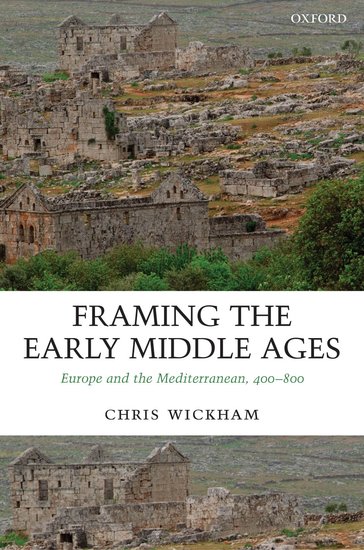
Chris had always been interested in comparison: this is what allowed Framing to distill its additive, composite picture of local societies and turn it into such a powerful analysis. In this he showed a nearly magical talent for sorting out the signal from the noise: what is really important from what is attention-grabbing, and what are real as opposed to superficial differences.
Besides comparison, the kind of thinking involved in Framing also involved paying attention to larger-scale connectivity. He was doing this just at a time when medievalists were becoming more interested in global history, and also coincided with the beginning of his tenure at Oxford. He did a great deal to make Oxford friendly to the Global Middle Ages, and indeed to make it an early adopter compared to many other institutions.
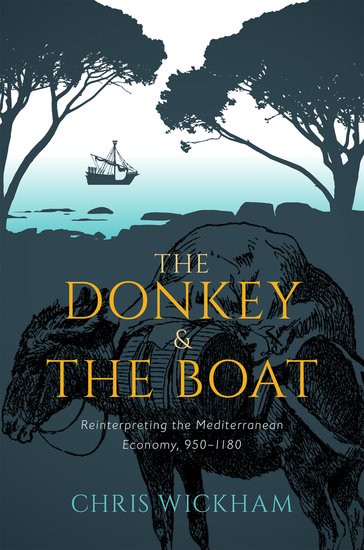
His was a genuine global history from below, an approach which to this day remains relatively exceptional. The Donkey and the Boat (Oxford, 2023), which was to be his last book, offers a very good bookend to Framing, even if Chris himself was adamant that it was not “Framing II”. Framing the Early Middle Ages is about how one system of Mediterranean exchange came unstuck; The Donkey and the Boat is about how another came together on a completely different basis - one less profoundly rooted in the priorities of states, more resilient to political crises, and fundamentally conditioned by the economic decision-making of peasant communities. This involved a number of exciting moves, such as downgrading long-distance trade itself from the status of key driver of economic complexity into a mere outgrowth of existing regional complexity that was gathering pace. Equally cut down to size were long-distance traders as protagonists, in favour of peasants – less commonly placed in the limelight in conversations over exchange. The book, throughout, argues for the primacy of the donkey over the ship.
All this shows how little Chris had slowed down. After his retirement he had begun to learn Arabic and use the Arabic Papyrology Database. The Donkey and the Boat, he stated disarmingly, turned out such a door-stopper because it “got out of hand” once he realised the secondary literature that he had hoped would be there just didn’t exist. He retained to the end the same sense of boundless vitality, enthusiasm and curiosity, of interest in other people’s specialties. At many points of his career he could have decided simply to make himself an expert in whatever book he had just finished, dug trenches, and defended it against any subsequent contributions. Instead, he always moved on to the next thing – even when it involved (as it always does) a phase of no longer being so expert.
The last paper he gave at Oxford was a memorable one on the Indian Ocean pepper trade, at the Medieval History seminar at All Souls in February 2026. He was just as bouncy, gregarious and productive at the time he died as he had ever been. His work will continue to provoke and inspire new generations of historians, who will discuss his ideas and build on them. It is heart-breaking that he will not be there to see that dialogue continue, but there can be no doubt that it will. To the profession as a whole, though, and to those of us who were lucky enough to count him as a friend, the loss feels incalculable.

Professor Alice Rio is the Chichele Professor of Medieval History at All Souls College.